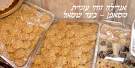
1 cup grated coconut 1 tbsp flour ½ cup evaporated milk 2 egg yolks 1 tsp vanilla ¼ cup crushed pineapple 6 tbsp chopped toasted peanuts
PACKAGING MATERIAL:
¾ cup sugar paper boxes
UTENSILS:
measuring cups and spoons wooden ladle saucepan stove oven
PROCEDURE:
1. Mix the coconut, sugar, pineapple and cook until almost done. 2. Add milk. Cook over low heat with constant stirring. 3. Add the slightly beaten egg yolks. 4. Continue stirring until thick enough to mold. 5. Pour into paper boxes for molding. 6. When boxes are filled, brush top with beaten eggs and bake until golden brown on top. 7. Serve hot or cold.
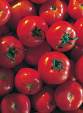
2. Blanch for 30 seconds and immediately dip in cold water. Remove skin and cut into halves (crosswise).
3. Strain the seeds through fine mesh stainless steel strainer.
4. Discard the seeds. Osterize and/or cut the pulp into small pieces.
5. Mix the juice and pulp. Cook the mixture to soften the pulp by boiling for 10-15 minutes with occasional stirring.
6. Strain and measure the puree.
7. Add 1 tsp salt and ½ tsp sugar to every cup of tomato puree.
8. Transfer the strained puree into a casserole and cook over a low flame for 15 minutes.
9. Continue cooking with occasional stirring until a pasty consistency is reached. Add cornstarch previously dissolved in water (if desired).
10. Fill while hot (80oC) in sterilized bottle. Seal.
11. Pasteurize in boiling water bath for 35 minutes.
1. Wash peels and cores of kalabasa, add three (3) parts water for every part of peel. Boil for 15 minutes.
2. Strain, add 4 c water for every 4 cups of strained liquid from boiled peels/core.
3. Add ¾ c sugar for every 4 c diluted liquid.
4. Pasteurize at 60 - 65ºC for 10-15 minutes.
5. Transfer in a sterilized container half-filled and cool. Add ¼ tsp yeast for every 4 c diluted liquid. Cover with clean cloth/paper.
6. Ferment for seven (7) days until alcohol content is about eight (8) percent by volume.
7. Pour gently the alcohol solution into another sterilized container so as not to disturb the sediments. Add one (1) cup vinegar starter for every four (4) cups of the solution. Cover with clean cloth/paper.
8. Set aside for 15-20 days then determine the acidity which is usually between 6-7 percent.
9. Decant/strain. Pasteurize at 60 - 65ºC for 5 minutes.
Young or old, everyone needs fresh, clean water to drink. This market driven reality has spurred one of the fastest growing industries in the world. The bottled water business offers a tremendous opportunity for income and profit to entrepreneurs on a variety of levels.
In starting a new business, you need to study the prospects that you have versus the competition that already exist. Ask yourself the following questions: a. Do you have a good location? b. Do you plan to provide a better price or better service? Anything that can make you a better alternative or source of bottled water can help you succeed.
Here Is A Guide How To Set Up/Start A Water Refilling Station Business:
1. Look for a supplier or seller of water refilling equipments and ask for the price list of different equipments that you can choose, if possible, ask for the feasibility study too to know how much the cost or total investment needed to put-up this type of business.
2. After studying the quotations and the total cost which you think is enough for your budget or capital, then you can start negotiating with the supplier. Ask for discounts and know the after-sales support you can get from them like maintenance and warranty. Don’t go for cheap equipments as this will not be worth in the long run. Always compare and check carefully what you can see on the photos they give against the actual equipment.
3. After choosing the right equipment to purchase, look for a good place to put your refilling station. Some local municipals require a minimum of 25 sqm. total area for this type of business, but oftentimes 20 sqm is enough. If you don’t want to rent a place, you can use your own house. Sales will not be a problem even you’re inside a subdivision.
Chayote or Sayote in Filipino (Sechium edule), is also known as christophene, vegetable pear, mirliton, choko (in Australia and New Zealand), starprecianté, citrayota, citrayote (Ecuador and Colombia), chuchu (Brazil), chow chow (India), cho cho (Jamaica), is an edible plant that belongs to the gourd family Cucurbitaceae. It is a relative of the melons, cucumbers and squash. Chayote is a plant that can climb as high as 12 meters. Its leaves are heart-shaped, 10-25 cm wide and with tendrils on the stem. The flowers are cream-colored or greenish that comes out beneath a leaf or branch. Male flowers of chayote are in clusters; when female, the flowers come singly.
The young leaves and tips are eaten as vegetable salad, the roots grow like yam (ubi) and are also edible when cooked as sweets or fried like sweet potato (camote que). When abundant, it is cheaper to use it as food for pigs as alternative to commercial feeds. Chayote prefers a cool climate with rains that are even during the year. It grows well in loose soil with fertilizer and likes rich volcanic soil.
Planting
1. Plant the matured fruit. This is allowed to germinate, first in a nursery. Upon reaching about 30 cm, it can now be transferred to the field.
2. Make holes about 30 cm wide and 3-5 meters apart from one another. Mix the soil with compost and put it back into the hole.
3. One to three seedlings can be planted in each hole. Cover with soil. Always clear the surroundings of weeds – until about 2 meters away from the plants. When the plant spreads and fill the trellises, the growth of weeds will be controlled.
4. Put trellises on every plant when these are about 30 cm high. Compost is the best fertilizer, but at 7-8 weeks, apply complete fertilizer before and after every rain.
Harvesting
If the chayote plant is planted for its fruits, do not prune the plant to get shoots; allow the big vine to spread so as to get the most sunshine and dew. But if the purpose is for shoots only, the plant gets pruned while the young leaves are gathered.
1. Manually pick the fruits when the desired size is reached.
2. Place the container of the harvested chayote in shade to keep them fresh for a longer time.
Pests and Diseases
Chayote is not beset with enemies of diseases like other plants. All it needs is care from weeds and adequate watering.
The main ingredient in a detergent product is a surfactant, a material containing in a single molecule, a hydrophobic (water-repelling) group on one end and a hydrophilic (water-attracting) group on the other end.
Surfactants are compounds that affect (usually reduce) surface tension when dissolved in water or water solutions. The HYDROPHOBIC group is a hydrocarbon containing 12 to 20 carbon atoms in a straight or slightly branched chain. The HYDROPHOLIC functional group may vary widely as a) an ANIONIC, b) CATIONIC and c) NON-IONIC. In general, the hydrophilic nature of those functional groups decreases from ionic to non-ionic groups. Soaps and detergents are ANIONIC while fabric conditioners are CATIONIC.
While soaps and detergents can be produced as bar, liquid or powder, the trend is in the use of liquid products due to economy in production and ease of application. A variety of organic molecules as a base material for detergents, either from mineral oil, crude oil resources or from natural products are used in practice.
MINIMUM REQUIREMENT
1. Weighing scale (top-loading, ordinary or digital), 10-kg capacity, 50 grams graduation 2. Plastic pail, 20-L capacity (2 pcs); 4-L capacity (3 pcs) 3. Electric hand mixer (portable), 1 unit 4. pH paper, 0-14 (Merck), 1 pack 5. Plastic bottle with cover, 250-mL capacity; 500-mL capacity 1-L capacity 1-gal capacity 6. Plastic water dispenser, 20-L capacity PROCESSING PROCEDURES
Liquid Dishwashing Detergent
Raw Materials:
851 g Deionized water (51+800) 11.7 g Caustic soda (flakes) 93.7 g LABSA* 27 g CDEA* 4 drops Colorant (McCormick) 1 g Essence (green apple) 15.6 g Sodium chloride (technical grade)
1. Dissolve the caustic soda flakes in water (1).
2. Slowly add to the LABSA with slow agitation for 10-15 minutes. 3. Incorporate CDEA and water (2) and continue mixing until homogenous. 4. Check pH and adjust with 10% caustic soda solution if necessary to get pH = 9 to 10. 5. Add the ingredients with slow mixing. 6. Set aside to allow clearing of solution (bubbles to subside). 7. Pack into clear PET bottles or containers.
Liquid Laundry Detergent
Raw Materials:
774.7 g Deionized water (74.7+700) 15.4 g Caustic soda flakes 122.8 g LABSA* 48.9 g CFAS powder/needle 5 g Na4 EDTA* (Trilon B) 10 g Aquasol 10 g Essence (Ariel-like) 13.2 g Sodium chloride (technical grade)
* EDTA – Ethylenediamine Tetraacetic Acid
Procedure
1. Dissolve the caustic soda flakes in water (1). 2. Slowly add to the LABSA with slow agitation for 10-15 minutes. 3. Dissolve CFAS and EDTA in water (2) in separate containers. 4. Incorporate CFAS and EDTA solutions with mixing after each addition then add “Aquasol” until clear. 5. Add essence until uniform. 6. Thickener may be added as desired. 7. Set aside to allow clearing of solution (bubbles to subside). 8. Pack into bottles or containers.
Fabric Conditioner
Raw Materials:
863.2 g Deionized water (800+63.2) 100.0 g Fabric softener beads 5 g Na4 EDTA (Trilon B) 2 drops Colorant (H2O-Soluble); McCormick 12 g Essence (Downy-like) 19.8 g Sodium chloride (technical grade)
Procedure
1. Fabric softener beads (or flakes) is slowly dissolved in water (1). (If you use flakes, dissolve in hot water at 80°C.) 2. Dissolve EDTA in water (2) and add to the dissolved Fabric Softener solution. 3. Add the remaining ingredients and mix until uniform. 4. Set aside and allow clearing of solution. 5. Pack into PET (plastic) bottles or containers.