Sep 3, 2018

Fish Culture in Cages

Both fish pens and fish cages are confinement structures used for rearing fish. The pen, however, is larger; it ranges from 10,000 sq m to more than a square kilometer in contrast to the cage which ranges in size from one square meter to several hundreds of square meter. Also, cage culture is done in at least one-meter water depth or in deeper waters. Thus, this type can either be stationary or a floating cage which can then be established in the sea, lake, cove or river where biophysical factors are favorable. Species of fish that are grown in fish cages are usually expensive and sold live for a certain group of consumers. Demand for live fish exports to Taiwan, Hongkong and China is fast-increasing. Seafoods that are popularly exported alive and grown in cages are grouper, humphead wrasse, lobster and seabass. These species, when cooked alive, command more than triple in prices. Wrasse and groupers are first-class fish species that are believed to also have medicinal properties for sick and recuperating people. 

How to Culture Fish in Cages Site selection 
Fish cages should be installed in suitable areas that are protected from strong waves and currents, free from pollution and accessible to the farmers and market. A minimum depth of one meter is required. 

Fish cages 
There are two common types of floating fish cages: the bamboo frame cage and the nylon net cages with frames. They are both provided with anchors and floats. Fish cage rearing can be done in freshwater and brackishwater areas. 

Bamboo frame fish cages 
They are made of hard bamboo slats tied or nailed to wooden frames. The usual measurements are: 2 m long, 2 m wide and 2 m deep, 3 × 3 × 2 m and 4 × 2 × 1.75 m. They are provided with whole bamboo floats or empty drums at the top side. Net or bamboo top cover with door and lock is provided. 

Advantages 
 · Cages are easy and cheap to construct. · Cages can be operated cooperatively. · Cages are easy to stock and feed · Fish grow fast in cages. · Cages are easy to harvest. 


Net fish cages 
They are made of fine-meshed (0.32-1.27 cm) nylon nets connected to a float frame of whole bamboo with empty drums of plastic or styrofoam to enhance buoyancy. The empty drum is optional for a small-sized net cage. The usual size is 8-10 sq m with 2 m-2.5 m depth. The net cages are provided with concrete weights that also serve as anchors. The cage is also provided with a mooring line to keep it in place, as well as reinforcement bamboo frames to spread the nets. Fish cages can be used for fish fattening or growing. For growing purposes, use fingerlings. Before stocking, weigh and count the fish. As a nursery for fingerlings, the cage should be made of fine mesh net. The size is appropriate for easy handling. There are two cages —the first is a brooder's cage with a 1.255.0 cm mesh size This is placed inside a bigger cage which functions as the confinement cage or as a conditioning cage for fishes, subject to transport. This is commonly used for rearing fingerlings to marketable-sized fish. The net's mesh size depends on the size of fish or fingerling that would be stocked initially. The cage area usually ranges from 1 sq m to 100 sq m or more and the depth ranges from 1.0-2.0 m or more. Cages are subject to fouling organisms. Clean heavily fouled nets as often as necessary to ensure efficient water change. Check the net daily for possible damages to prevent escape of the stocks. Check also the structure (e.g., bamboo structures, ropes, sinkers, floats, etc.). Guarding the fish cages should be done at all times to prevent losses from poaching. Construct a caretaker's hut at the culture site to discourage poachers. 

Rearing of the stock 
 Fish sampling is done at least every month to determine the growth rate and the proper quantity of feed to be given. Expose the fish to outside parameters that may affect their feeding performance which eventually affects their growth rate. During the wet season, water temperature usually drops; thus, decelerating growth rate. In summer, the growth rate is faster. Hence, feeding should be regulated. Practice an addition feeding to determine the actual food needs of the fish, especially before the sampling schedule. Do not feed fish subject for sampling. On the average, depending on the fish species and the kind of feeds, the feeding rate is three to five percent of the body weight. Give commercial feeds at three percent and trash fish at five percent. In the absence of commercial type, an alternative feed may be made at home, suited to fish requirement, e.g., a 70-percent rice bran, mixed with 30-percent fish meal or fine trash fish for Tilapia mosambica (hybrid). Feeding should be done early in the morning and late in the afternoon by equally dividing the feed needed. It is important that feeds are available at all times when using fish cages. Feeding trays may be used to mimize wastage of feeds. Culture period ranges from three to five months. The stocking rate can be 5-20 pieces per square meter. 

Harvesting and marketing 
 Here is one way of harvesting fish: For the net cage, untie the bindings at the corners and sides of the net from the float frame. Insert a bamboo pole at the upper edge of the net cage and push the net along in order to corner the fish at one end. Scoop the fish with hand nets. The fish, if sold live, fetches a higher price. It is, therefore, advisable to place the fish in double plastic bags containing well-oxygenated water. The bags are then placed in styrofoam or burl bag containers. Dead fishes to be sold should be packed in crushed ice at the rate of 1:4 by weight (1 kg ice to 4 kg fish) for nearer markets and 1:1 ratio for more distant markets at a temperature of 0° C which is good only for 24 hours or less. 


Source:IIRR. 1995. Livelihood options for coastal communities. International Institute of Rural Reconstruction, Silang, Cavite, Philippines. Published 1995 by the International institute of Rural Reconstruction Silang, Cavite 4118 Philippines. Printed in the PhilippinesISBN: 0-942717-64-3; photo from www.scotland.gov.uk.
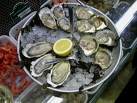
Oyster Culture

Oyster culture in the Philippines began at Hinigaran, Negros Occidental, in 1921. Oyster or talaba is a popular bivalve delicacy because of its excellent flavor and taste. It is mostly marketed in the shell as freshly-shucked meat. Some salted oyster or bagoong are made during peak harvest season. It is rich in vitamins, minerals, proteins and carbohydrates. The shells are mostly used as raw materials for the manufacture of lime and poultry grit. The shells also serve as spat collectors for culturing. Mariculture of oysters have been expanding to other areas in the past years. There are about 5 sq km used for oyster culture ranging from 1,500 m-5,000 sq m in about 1,300 farms. Oyster farms are located in 17 provinces comprising Regions I, IV and VI. Major producers are Negros Occidental, Pangasinan and Cavite (Oyster, Commodities Series, No. 64, TLRC 1988). There are little or no available records of oyster preparation exports and data on consumption. Oysters are mostly consumed near production areas. 

  Site selection 

 Oysters thrive best in brackish to marine waters with salinity ranging from 15-26 ppt at 20-30ÂșC water temperature. Viable oyster farming grounds have indigenous species of spawners that are present. The water should be free from pollution with green to blue-green color. The area should be free from flooding that may result to 0-10 ppt salinity; this causes heavy mortality and heavy siltation. Water depth should be at least 1.5-4.0 m at the lowest tide. The bottom is either hard non-shifting or soft and muddy. Areas for culture must be naturally protected against strong wind and wave action along landlocked bays or estuaries. Materials for structures should be readily available and cheap. Preferably, sites should be near markets or centers of population within 100 km. The presence of endemic seeds or spats in the area is preferred, but seeding or transplanting of oysters may be undertaken.
Culture aspects 

There are four popular species of oyster for culture: 
 · Crasostrea iredalei (Talabang tsinelas or slipper-shaped) 
· Saccostrea malabonensis (Kukung kabayo or oblong) 
· palmipes (Pulid-pulid or palm-rooted) 
· cucullata (Kulot or wild oyster) 

 The first two species arc recommended for growing. Peak natural spatting season or spawning usually occurs in January to February and May to September. Fertilization of spawned oyster eggs takes place in the water. After hatching, a planktonic larva emerges and remains in the waters for two to three weeks before settling down. Spats or seeds about the size of sand grain attach to suitable substrates (like logs, stones, shells, bottoms, etc.). The most suitable and commonly used spat collectors are empty oyster shells. After a growth period of one month, the juvenile oysters (young) measure about 1.27 cm long. Oyster food consists of microorganisms, phytoplankton and organic matter which they strain or filter out from the water with their gills. This explains why oysters thrive well in fertile waters. It normally matures after 6-10 months from seeding. Culture period should be started before spatting season or spatfall. Juvenile oysters can be transplanted to other areas with no available spats. 

Methods of culture 

 There are several methods of culture: stake (tulos), hanging (pabitin), long line (sampayan) or stone (paringit). However, the hanging method is recommended. The hanging method is constructed by piling a 3.04.0 m bamboo post or 7.6212.70 cm diameter wooden post at 4.0 meter distance in between rows and 1.0-1.5 m between rows. The rows should be 8 m long (the normal length of hard bamboo) and the number of rows should be ten per lot. In-between rows are lanes of at least 2-3 m for the caretaker's dugout wooden boat to pass. Bamboo pole platforms are tied to the post at about 0.50 m below zero tide level. Threaded empty oyster shells ranging from 12-16 pieces at a distance of 7.62-10.16 cm in-between shells or clutches serve as the spat collectors. Use No. 3 or 4 polyethelene ropes or plastic twines. The threaded cultches arc then hung al the bamboo pole platforms. Maintan, 20.0-25.0 cm distance between substrates or cultches. 

Maintenance 1. Check the structure for damage and promptly replace damaged parts, where appropriate. 2. Set the hanging oysters just below the normal low tide level. 3. Remove sponges growing on the surface of the oysters. They impede the flow of water and food as well as compete for oxygen and food. 4. It is desirable to construct a caretaker's hut in the farm to deter potential poachers and to facilitate management of the farm. 

Harvesting Not much care is needed in oyster farming, except by guarding it from poachers through frequent visits or by staying at the site two to three months before harvest. Harvesting is done by pulling the hanging cultch lines. Separate the bigger oysters for market and leave the small ones at the bottom bamboo tray to grow further. Submerge and clean harvested oyster shells. Pack them in gunny sacks or bamboo baskets or kaing. The bamboo basket contains about 40 kg freshshell oysters. The marketable size is 6.0-12.50 cm long. Oysters are best harvested before the spatting season of March to May because they are fat and delicious during summer (dry months). Production can reach 8-12 metric tons per hectare. A family-sized growing area of 2,500 sq m is an ideal, livelihood project for beginners. In areas where there is an occurrence of red tide that cause poisoning to humans, harvesting should be suspended or stopped until the area is cleared or free from red tide organisms. 

Natural oyster populations, farming areas and potential sites in the Philippines 

 1 Buguey, Cagayan (NG,FA) 2 Ilocos Norte (NG, FA) 3 Ilocos Sur (NG, FA) 4 Aringay & Sto. Tomas, La Union (NG, FA) 5 Lingayen Gulf & Tambac Bay (NG, FA) 6 Agno River, Manat, Binmaley, Pangasinan & Davel, Dagupan City (NG, FA) 7 Binuangan & Malolos, Bulacan (NG, FA) 8 Abucay & Mariveles, Bataan (NG, FA, PS) 9 Cavite—Bacoor & Ternate Bays (NG, FA) 10 Balayan Bay, Batangas (NG, FA) 11 Batangas Bay (NC, FA) 12 Tayabas Bay (PS) 13 Makato, Aklan (PS) 14 Sapi-an Bay, Iloilo (NG, FA) 15 Banate Bay, Iloilo (NG, FA) 16 Bacolod (Port of Banago) (NG, FA) 17 Binalbagan and Hinigaran, Negros Occidental (NG, FA) 18 Himamaylan, Negros Occidental (NG, PS) 19 Panguil Bay, Misamis Occ. (PS) 20 Luuk, Bongao Cove, Sacol [s], Zamboanga del Norte (PS) 21 Scall Lagoon, Sta. Cruz, Zamboanga del Norte (PS) 22 Malalag Bay, Davao City (NG, FA) 23 Del Caman Dapa, Surigao del Norte (PS) 24 Calape, Bohol (NG, FA) 25 Cebu (NG, FA, PS) 26 Leyte (PS) 27 Maqueda Bay & Jiabong, Samar (PS, NG) 28 Catbalogan, Samar (PS) 29 Sorsogon (NG, FA) 30 Pagbilao Bay, Quezon (PS) 31 Alabat Island, Quezon (PS) 32 Polilio Island, Quezon (PS) Legend NG - Natural grounds FA - Farming areas PS - Potential sites 


Source:photo cornichon.org; The Science and Business of Growing Oysters, PHRDC, 1991., and The Feasibility of Oyster and Mussel Farming by Municipal Fishermen in the Philippines, South China Sea Fisheries Development and Coordinating Programs, January 1982., IIRR. 1995. Livelihood options for coastal communities. International Institute of Rural Reconstruction, Silang, Cavite, Philippines.

Sep 2, 2018

Shrimp Culture

Ang hipon ay kinikilalang pinaka-popular na shellfish sa Pilipinas dahil sa kakaibang lasa nito. Isa rin ito sa nangungunang ikinakalakal ng ating bansa sa dahilang ang hipon ay makikita sa iba't ibang bahagi ng ating bansa at madali pang paramihin. Mahusay na pagkukunan ng mataas na protina, bitamina at mineral ang hipon. Mababa ang fat at calorie content nito madaling matunaw sa ating tiyan. Ayon sa pananaliksik ng Freshwater Fisheries Research Station, malaking potensyal ang pag-aalaga ng hipon sa palaisdaan. Ito ay madaling alagaan at nangangailangan lamang ng maliit na puhunan. Hindi naman biro ang halaga ng hipon ngayon sa mga pamilihan, kaya bihira ang nakapag-uulam nito. Ganoon pa man, mayroon ding solusyon kung papaanong mai-bababa ang presyo ng sugpo sa pamilihan. Dapat subukin ng mga magsasaka na pumalaot sa sa pag-aalaga ng hipon, na bukod sa may sagana sa makakain, madali at mahuhay din itong pagkakitaan.

URI NG HIPON
 
Alamang - ito ay isang uri ng hipon na bihirang lumagpas ng isang pulgada ang haba 
Hipong Puti - ang kulay ng katawan nito ay magkahalong abuhin at dilaw namay pula sa paa at buntot Tagonton - ay nakapaliit na hipon na malapad ang ulo kaysa sa kanyang katawan 
Ulang - ay may matibay na sipit. Ito ay matatagpuan sa tubig-tabang at ilog. 
Suahe - ang katawan nito ay mababalutan ng di pantay-pantay ng pinong buhok na may batik. 
Sugpo - ang katawan nito ay umaabot ng labing-tatlong pulgada (13 inches) ang haba. 


MGA KAILANGAN SA PAG-AALAGA NG HIPON 
 1. Patuloy na patubig mula sa ilog o dili kaya ay bumomba mula sa poso (artesian well). 
 2. Kailangang malinaw, malinis ang tubig at hindi nagtataglay ng mga nakakalasong sangkap ng polusyon. 
 3. May tamang disenyo nag palaisdaan, upang mabilis ang pagpapalit ng tubig o pagpapatuyo nito. 
 4. Naabot ng sikat ng araw upang makapagpatubo ng likas na pagkain "plankton"at halamang nagbibigay ng oksineho(oxygen). 
 5. Kailangang "clay loam" o lupang banlik dahil ito ay nakapag-iimbak ng tubig. 
 6. Dapat hindi nanganganib sa baha. 

PARAAN NG PAG-AALAGA NG HIPON 

Paghahanda ng Palaisdaan a. Pakatihin at patuyuin ang palaisdaan sa llob ng limang araw upang maalis ang lahat ng nabubuhay dito, kagaya ng hito, dalag, kuhol, palaka. b. Ang palaisdaan na may sukat na 3m x 8m ay mainam na panimula sa pag-aalaga ng hipon. Panatilihin ang lalim ng tubig mula 0.6-1.0 metro c. Maglagay ng organikong pataba tulad ng ipot ng manok o chicken manure sa daming 150 gramo bawat metro kuwadrado (150g per sq. m.). d. Ulitin ang paglalagay ng pataba tuwing ikalawang lingo subalit kalahati lamang ng naunang dami. 

Pagpapakawala ng Binhing Hipon Magpakawala ng daming sampung piraso bawat metro kuwadrado, sa proporsyong isang lalaki at siyam na babae. Ang hipon na may sukat na 2.5cm hanggang 3.0cm ay mainam na panimulang binhi. 

Pagpapakain Kung sapat ang pagkaing natural o plakton sa palaisdaan, hindi na kailangang gumamit ng karagdagang pagkain o supplemental feeds. 

Pangangasiwa ng Palaisdaan Ang paglalagay ng bunbon o siit sa palaisdaan ay kinakailangan upang magsilbing silungan o kapitan ng maliit at malalaking hipon, lalo sa panahon ng pagluluno. Dagdagan o bawasan kung kianakailangan, ng magsindaming tubig ang palaisdaan minsan sa loob ng ilang buwan kung tag-ulan at dalawang beses o linggu-linggo sa panahon ng tag-init, upang mapanatili ang linis ng tubig at oksinehong kailangan ng hipon. 

PAG-AANI Sa loob ng apat na buwan ay maari nang anihin ang hipon. Pakatihin ang palaisdaan sa pamamagitan ng paglalagay ng kanal sa gilid o gitna upang magsilbing daanan o agusan ng tubig at hipon. Sa patungong labasan o "gate" kinakailangang may lambat na may ibat- ibang laki ng mesh size upang kusang mapaghiwalay ang maliiit sa malalaking hipon.


source:http://www.da.gov.ph