Sep 28, 2023

Hito Raising or Catfish Culture


If you want to know tips and procedure how to culture Catfish or Hito, then this is the post your looking for.

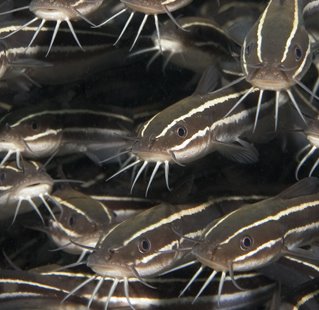
Hito can be raised in a small pond. There are two common varieties of catfish in the Philippines—one that is our own native hito that thrives in rice fields and rivers, sometimes in muddy places; and the other one brought over from Thailand or Taiwan. Both kinds can be raised and grown commercially.

Within four months, hito can grow as big as a size weighing 300-400 grams or three in a kilo. In Taiwan, they grow hito as big as two kilos each.

Hito from Taiwan origin is dark gray with white belly.

Cage

1. For commercial purposes, one hectare of fish pond can rear as many as 100,000 small hito or fingerlings. In other countries like Thailand, they grow as many as 300,000 to 400,000 fingerlings in one hectare of fish pond.

2. The sides of the fishpond should be concrete so as to withstand flood or heavy rains. The smaller the grow-out ponds, the easier to manager them. (1 ½ hectare)

3. It is not necessary to provide an aerator even if the fish population is big because the hito has an auxiliary respiratory organ and can naturally breathe fresh air; therefore it is not stressed by low dissolved oxygen levels.

4. The ponds water depth must be about one and half meters ( ½ m) throughout the culture period. fresh water may be drawn from a nearby river. Change of water is done when it becomes murky.

Feed

Hito needs protein, so they like flesh meat. They can also thrive on any food growing in the pond bottom, or they can eat one another, or escape from the pond. So, they must be provided with enough protein foods—carcass, trash fish, commercial fish feed.

Some hito growers get their carcass feed from chicken or poultry internal organs, or trash fish from fishermen.

It takes four months to grow hito that is about 2 kilograms, or three-to-four-pieces per kilo.


Here is video:

NC Perante assisted in creating this blogpost. 

 Nelson Perante

 Nelson Perante

 Nelson Perante

 Nelson Perante


Sep 26, 2023

Alimango or Mud Crab Culture


Scylla serrata (often called mud crab or mangrove crab)i s an economically important crab species found in estuaries, mangroves, swamps and tidal waters, living both as a scavenger and a cannibal. Scylla serrata can be found all over the Philippines.

There has been a huge interest in the aquaculture of this species due to their high demand/price, high flesh content and rapid growth rates in captivity. The crab species Scylla serrata is the biggest and most important member of the family of edible crabs in the Philippines. Mud crab, or alimango, is considered a delicacy and has become a popular fare in seafood restaurants. It is sought for its very tasty aligue or ripe eggs in the ovary.

Crab farming has become an integral part of aquaculture in the country. This practice began in the early seventies when some fishpond operators in Bicol, Visayas, and Southern Tagalog started to culture crab as a subsidiary crop in milk fish or bangus ponds.

Breeding and spawning. The mating period of crabs is usually long. When mating, the female is carried by the male, clasping her with three pairs of walking legs. In this condition, it is very easy to catch them. After five days, the female is finally released by the male. Mating usually occurs for four months, during the period May to September. Prior to that, in April, the females develops eggs or aligue.

Crabs spawn in the sea. The newly hatched larvae called zoea are free-swimming. They are carried by the tide to the coast where they migrate to live-in estuaries, swamps and mangroves. Fertility is very high among females. As much as a million eggs can be laid but mortality is also high because of inclement climatic conditions.

Molting. This is an indispensable stage in the life cycle of crabs. During molting, they shed their covering or carapace. This happens when there is an abrupt increases in the size of their body. After shedding the old carapace, the crab is left with a very soft covering. It becomes an easy prey to other animals and survive, the crab buries itself under the mud until the soft shell hardens.

Culture and cultivation methods. Small crabs or crab seeds are caught by fishermen in seashores, swamps and other natural habitats. They are gathered and sold to fishponds operators.

Crabs are raised in brackish water fishponds. Crab and can be raised simultaneously. It is, however, not advisable to culture crabs together with prawns or sugpo, because when prawns undergo molting, crabs eat them.
Choosing the crab farm. Choosing a site for crab farming is not difficult. First, there should be adequate supply of estuarine water because good and stable salinity is conducive to growth. Smaller ponds are advisable since they are easier to manage. Make sure the soil is clay or clay loam. This kind of soil is capable of retaining water. If possible, the site should be free from floods. The depth of water is also important. Advisable depth is one meter to prevent exposure of cultured crabs and stop them from boring holes through the dikes. For easy harvesting, the site should have good drainage. This also facilities the practice of pond freshening whereby the water is cleansed by letting in fresh seawater. Available of crab seeds in the area is also important. This ensures a steady number of young crabs for rearing and the continued operation of your farm.

Managing the crab farm. For crab farming, the ponds are prepared just like any bangus fishpond but the side of the dikes should be very firm to discourage the crabs from burrowing through. Place banatan or bamboo screen along main dikes to prevent escape of crabs. About 2,000 to 4,000 crab seeds, 2 to 5 cm in length and size, would be needed initially. Stock them directly in the rearing ponds. Feeding is not a problem since young crabs feed on algae and decaying organic matter. As they grow, crabs become carnivorous. Supplement their feed with trash fish and leftover food. Their rate of growth is rather slow. It takes five to six months for crabs to grow into marketable sizes.

Application of fertilizer is helpful. This enhanced the growth of natural food like moss in the ponds.

Harvesting. This is done with different kinds of trap like the bamboo cage, lift net, scissors net, fish corrals and gill nets. Crabs are ready for the harvest and marketing when the piece or two reaches up to a kilo. They are sold alive and can stay out of the water even for a week. They should, however, be kept in damp containers and periodic moistening is important. Feed them with trash fish and other kitchen refuse.

Handling. Adult crabs in captivity are tied with dried nipa strings. Both pincers are tied close to the abdominal cavity to prevent crawling. When transported, proper handling is important. Place them in baskets or tiklis to avoid getting trampled or crushed.


Source: DOST, photo courtesy of www.roxascity.gov.ph
NC Perante assisted in creating this blogpost.

Sep 23, 2023

How to set up a tilapia hatchery Business


Tilapia is a variety of cichlid fishes of the genera Oreochromis. Tilapia and is nearly equivalent to a taxonomic grouping known as the tilapiine cichlids. Tilapias inhabit fresh and, less commonly, brackish water habitats from shallow streams and ponds through to rivers, lakes, and estuaries. Most tilapias are omnivorous with a preference for soft aquatic vegetation and detritus. They are of increasing importance in aquaculture around the world.

Tilapia has been dubbed the “aquatic chicken” because it grows fast, breeds in captivity easily, and the technology for its propagation and culture requires little input. Hatcheries can readily supply the seedstock that the tilapia farming industry needs.

Setting Up a Tilapia Hatchery

Hatcheries are of three types: concrete tanks, which give the highest production; hapa netcages in lakes, the second highest; then ponds.

Jun 26, 2023

May 12, 2023

No Capital, but want to go into business?


I actually read a few blogs a day, and there are many that I can recommend. For this site, I want to repost Moks entry in his blog because I think this entry is very useful to and for "wanna be" small entrepreneurs.


Paano giginhawa?

by Pinoy Manggagawa sa KSA

While drinking beer with a friend last week, my friend complained that life is difficult. Mabuti pa raw ako, “abroad” (his indirect way of telling me na ako ang magbayad, ahihi). His take home pay is 11,000 pesos, while his wife is 9,000 pesos for a total of 20,000 pesos a month. They have two young children, one is 5 years old and the other is 3 years old…..parehas daw malakas lumagok ng gatas, hehehe. May ATM debt pa raw sya sa opisina nya, which charges 10 per cent a month. Ano raw ba gagawin nya? Should he go abroad para daw lumaki ang kita nya? Paano na lang daw, pag-nag-aral na mga anak nya, tyak daw talagang kakapusin sila. His reasoning was, no employee became rich; most government employees get old and get deeper in debt. (unless corrupt, diba?), hehehe

Hay buhay nga naman…….ang sagot ko ay:

Kahit abroad ka kong hindi mo rerendahan ang gastos mo, ganoon din, wala kang maiipon. Kahit hindi ka abroad kong hindi mo rin rerendahan ang gastos mo, ganoon din. Sabi ko, try to save. I asked him to list his monthly expenses: gastos sa yosi – Marlboro, palitan mo ng Winston, bawasan mo beer budget mo, add more vegetables to your diet, kong OK pa cellphone mo, why buy a new one? blah blah…etc. etc. Sabi ko, isipin mo 16,000 lang take home pay niyong mag-asawa a month, and live on it. Budgetin mo. Now save that 4,000 a month for 6 months, and how much you will get? 24,000 diba? Now instead of you taking the loan at 10% a month, asked your fellow employees to get a loan from you at 8% a month. Roll that, and continue saving 4,000 a month and how much you will get, with the power of compound interest, after a year; what about after two years? Magaling ka sa math diba… magkano?

His calculation showed that a person can save 67,000 in one year and almost 250,000 in two years, that is, if the the person continues saving 4,000 a month and lending it to his office mates continuously at 8% a month.

Ayan…. you will have a total asset of 0.25 million in two years, and an added income of almost 20K a month on interest alone after two years. Can you imagine how much will it be in 10 years? Magkano nga ba? Yayaman ka rin …….sabi ko.

There are many other small businesses than anyone can go into that could earn more than 8% a month.  Some food business (siomai food cart, carenderia etc.) are marking up their prices by more than 10%.

The lesson is: Just spend less than what you earn, and invest wisely. And most importantly, you have to start Now!

================
Since we are on this, I am wondering how much the "bombays" earn in my City since they have been charging 20% (5-6), and their clients are almost all the vendors and small stores here, and they have been doing this since I can remember. In fact, one of my shop neighbors told me that she had been on a loan from a "bombay" for the past 15 years na "walang patid", and her monthly loans ranges from 3,000 to 5,000 pesos at a time, up to 10,000 pesos, and she had been paying the "bombay" religously- daily for the past 15 years!


May 7, 2023

Making Tocino, Longanisa, and Sausage


This food guide are some of the favorite food you will find in a Filipino table.Tocino is synonymous with bacon in Spanish made from the pork belly. In Caribbean countries, such as Puerto Rico and Cuba, tocino is made from pork fatback  and neither cured nor smoked, just fried until very crunchy and added to recipes, much like lardons in French cuisine. While, longanisa is a Spanish sausage (embutido) similar to a chorizo and also closely associated with the Portuguese linguiça. Below are video guides how to prepare these cuisines.

How to make Tocino


Ingredients and Weight

Shoulder 1.0 kg
Salt 20 g
Sugar 80 g
Prague powder 4 g
MSG 4 g
Black Pepper 4 g
Phosphate 3 g
Water 100 ml

Procedure:

1. Slice the meat across the grain.
2. Dissolve all the ingredients.
3. Mix in the sliced meat thoroughly.
4. Cure in the chiller for 24 hours.
5. Package.

Sausages


How to make Skinless/Fresh Sausage


Ingredients and Weight:

Pork lean trim 600 g
Pork fat 400 g
Salt 18 g
Sugar 90 g
Prague powder 4 g
MSG 4 g
Black Pepper 4 g
Phosphate 3 g
Water 50 ml
Garlic 10 g
Corn starch 10 g
Pineapple Juice 30 ml
Vinegar 10 ml
Anisado Wine 10 ml


How to make Smoked Sausage


Ingredients and Weight:

Pork lean trim 600
Pork fat 400 g
Salt 18 g
Sugar 30 g
Prague powder 4 g
MSG 4 g
Black Pepper 4 g
Phosphate 3 g
Water 50 ml
Garlic 10 g
Corn starch 10 g
Skimmed Milk 5 g
Pineapple Juice 10 ml
Vinegar 10 ml
Anisado Wine 20 ml

Procedure:

1. Grind lean and fat, mix thoroughly.
2. Dissolve all ingredients for each type of sausage per kg meat.
3. Mix ingredients with meat.
4. Cure for 24 hours.
5. Stuff and link
6. Smoked sausage and native sausage are smoked for 3 hours.
7. Chill the smoked sausages.
8. Package and store in the freezer.
Source: www.da.gov.ph, photo from www.espisfoods.com


May 2, 2023

Swine or Hog Production (Piggery)


Swine raising is common and practical among farm families. This is because of the many advantages it gives the raiser which allows them to lessen the costs they spend while farming. For example, pigs convert feedstuffs and waste materials not used by man into pork, swine also has shorter development period which can add to the income of the raiser. The farmer/raiser can also use hog manure to fertilize his farm. Also, pork is the most common source of protein.


Popular Breeds


If you want your swine business to succeed, choose the right breed to raise. Below are the characteristics of breeds that grow well specially in Region 2.

Duroc - It is a heavy breed with color that ranges from light to very dark red, almost like the color mahogany. Durocs are productive, good mothers and milkers. It has good quality meat with very high dressing recovery percentage. It is excellent for cross-breeding.

Landrace - This is a light breed. It is white although you would commonly see black spots. It has a long body, square meat, short legs, ans medium to large drooping ears. They are good mothers, heavy milkers, and produce large litters from 14-18 piglets with very good growth rate and good food use. The thickness of the body and weak hind legs can be improved by crossbreeding with Large White or Duroc.

May 1, 2023

Morringa Juice


Recently, Sen. Zubiri said that they had a baby because of Malungay. All I can say is that, its great! Anyway, here's a new refreshing way of consuming the lowly malunggay vegetable.

Dr. Edwin Balbarino of the Visayas State University reported that malunggay juice is extracted from the leaves of the vegetable in Leyte. The extract is mixed with lemonsito juice to produce iced candies or cold drinks for children who normally do not like eating vegetables.

------------------------

Following the massive campaign of the several health benefits from malunggay, a line of malunggay-based products have been released in the market. There is the malunggay oil for cooking, which can be used as an alternative to olive oil; the malunggay powder that can be used as flavoring or additive to pre-processed food products such as noodles and pandesal; malunggay tablets are also made as a health supplement.

Still, the list of malunggay-based products is growing because of the nutrients that can be derived from the vegetable, hence the innovation of refreshments from malunggay.

After the discovery of a Japanese businessman on the health benefits from malunggay, Mr. Mitsuo Shoji developed the malunggay tea, which he claims can cure many human diseases.
Malunggay in tea bags are now widely sold in the market, which are developed by Mr. Shoji's company and other companies in the private sector.

The malunggay, also termed as moringa, is a vitamin rich vegetable, and contains protein, iron and potassium. It contains anti-oxidants that suppress the activities of free-radicals, which causes cell death.

As part of its campaign to combat poverty, malnutrition and other health disorders, the Department of Agriculture (DA) promotes the planting and consumption of moringa. Malunggay can be planted using seeds and cuttings. The development of malunggay- based products and its commercialization is likewise promoted by DA.

Source and photo courtesy: Ellaine Grace E. Nagpala at www.bar.gov.ph


Apr 30, 2023

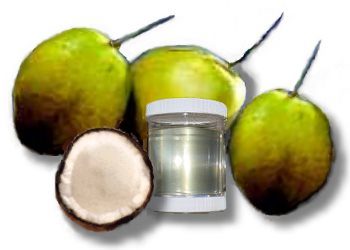
How to make Virgin Coconut Oil (VCO)


Virgin coconut oil and regular coconut oil is rich in Lauric Acid, an essential fatty acid that is only found in high concentrations in mother's milk. When taken internally, Lauric Acid turns into a compound known as Monolaurin. It is this compound that is believed to fight viral pathogens that protects the body from bacteria, viruses and infections from parasites. Coconut oil also causes the metabolic rate to increase, hence helps reduce weight and is safe and beneficial for diabetics.

How to make Virgin Coconut Oil:

1. Select about 8 mature coconuts. Make sure dehusked shell is intact and has no breakage and that there is water inside the nut. To test, shake it.

Mar 5, 2023

Herbal Soap Making Guide


What is Herbal Soap?

Herbal soap is a kind of soap mixed with natural ingredients, juice or extract and vitamins from medicinal plants.

How to Make Herbal Soap

Utensils:

Plastic pail
Wooden ladle or bamboo stick
Glass or cup
Mortar and pestle
Cheese cloth or strainer
Knife
Chopping board
Cooking pot (preferably made of clay, enamel, stainless or glass)
Stove
Plastic molders

How to Make Akapulko and Guava Soap


How to Prepare a Decoction:

Feb 8, 2023

How to Make Cassava Cake

The name "cassava" is sometimes spelled cassaba or cassada. Cassava can be cooked in various ways. The soft-boiled root has a delicate flavor and can replace boiled potatoes in many uses: as an accompaniment for meat dishes, or made into purées, dumplings, soups, stews, gravies, and others. Deep fried (after boiling or steaming), can replace fried potatoes, with a distinctive flavor.

Tapioca and foufou are made from the starchy cassava root flour. Tapioca is an essentially flavourless starchy ingredient, or fecula, produced from treated and dried cassava (manioc) root and used in cooking. It is similar to sago and is commonly used to make a milky pudding similar to rice pudding. Cassava flour, also called tapioca flour or tapioca starch, can also replace wheat flour, and is so-used by some people with wheat allergies or coeliac disease. Boba tapioca pearls are made from cassava root. It is also used in cereals for which several tribes in South America have used it extensively. It is also used in making cassava cake, a popular pastry.

Cassava cake is popular in the Philippines. Below is a recipe how to make it.

Ingredients:

1 3/4 c cassava flour
1/4 c mongo flour
1 c sugar
1 c diluted milk
2 pcs egg (yolk and white beaten separately)
2 tsp baking powder
1/2 c margarine
1/2tsp vanilla

Procedure:

1. Sift together the measured baking powder and cassava flour.
2. In a mixing bowl, cream margarine until smooth. Add sugar gradually and mix well.
3. Alternately add egg yolk, dry ingredients and milk. Mix thoroughly in one direction until well blended.
4. In a separate mixing bowl, beat the egg white until stiff peak is form.
5. Fold in the mixture to the beaten egg white.
6. Pour the mixture in an ungreased baking pan.
7. Bake at 307 C for 25 to 30 minutes.
8. Remove from oven and allow to cool before serving.
9. Cassava butter cake ready for consumption.


Jan 16, 2023

Making Pork Ham, Bacon and Chicken Ham


HOW TO MAKE PORK HAM


Ingredients and their Weight

Ham 1.0 kg.


Pickling Solution:
Salt 19.8 g
Sugar 4.6 g
Prague powder 4.2 g
Phosphates 3.0 g
Water 100 ml

Dry Mixtures:

Salt 28.0 g
Sugar 6.0 g
Prague powder 6.0 g

Jan 10, 2023

JackFruit Processing

Jack fruit is commonly grown in Asia and is widely used in Southeast Asian cuisines. Jack fruit can be eaten unripe (young) when cooked. The Jack fruit seeds may be boiled or baked like beans.  Processed Jack fruits are also widely sold in groceries and mostly in tourist and pasalubong shops. If you are planning to go into Jack fruit processing business, then here is a guide how to most of the processed Jackfruit sold in the market today.

How to Make Dried JackFruit

Procedure

1. Wash jack fruit with clean tap water.
2. Soak in 200 ppm chlorinated water* for 10 minutes to reduce microbial load.
3. Cut into halves.
4. Separate edible yellow pulp from the white pulp.
5. Remove the seeds.
6. Weigh the yellow pulp.
7. Prepare 60% syrup* in a container. Mix sugar and water to dissolve. Bring to boil.
8. Blanch the pulp in syrup until translucent. Cool.

Dec 13, 2022

How to make Taho and Tokwa

Making taho and tokwa are ideal small business with low capital. Taho is a Philippine snack food made of fresh soft/silken tofu, arnibal (brown sugar and vanilla syrup), and pearl sago (similar to pearl tapioca), while tokwa if the Filipino version of tofu. There are video guides below showing how these products are done, watch it and enjoy.

HOW TO MAKE TOKWA

Materials

500 gms soybeans
60 gms CaS04 Food grade (calcium sulfate)

Utensils
grinder or blender
stove
stainless casserole
weighing scale
basting spoon
plastic basin
knife
cheesecloth (1 yard)
tokwa press

Dec 4, 2022

Tips on Handling Difficult Customers

by Neen

1. Don’t take it personally – remember when a customer complains they are unhappy with the product or your company – not you.

2. Remember you are good at your job – remind yourself of the skills you have and why you are working there. Don’t allow customers to make you feel inadequate.

3. Write down their complaint or concern – show the customer you are listening by recording their problem and if you are on the phone, tell the customer you are writing down all the details.

4. Ask a supervisor to join you and be part of the transaction – if the customer is becoming more difficult, invite a supervisor to join you and the customer will notice you are treating them as important by seeking additional help.

5. Debrief the situation with someone else when the customer leaves – sometimes you may need to talk to someone about your difficult customer to debrief and get rid of any negative thoughts and emotions you may have – this is a very important step.

Nov 21, 2022

How to make coco burger


If you are a vegetarian, then a coco burger (from coconut meat) is definitely for you.  This is a basic guide on how to make coco burger, and you can improvise along the way (just be imaginative), and you can develop a coco burger recipe that will suit you.

INGREDIENTS:

2 cups coconut 'sapal' (this is grated coconut meat)
¼ cup flour
1 tsp salt
5 tsp toyo (soy suace)
1 egg
2 tsp cornstarch
¼ tsp vetsin (optional)
¼ tsp black pepper
¼ cup chopped onions

Oct 14, 2022

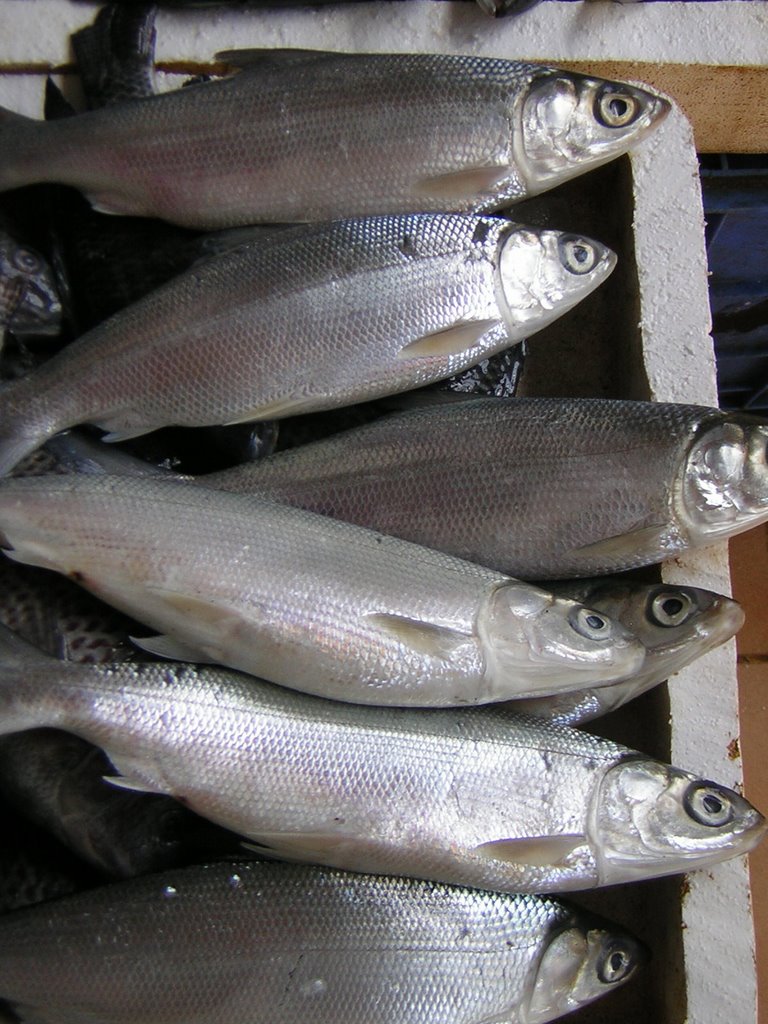
Milk Fish or Bangus Culture


Raising milkfish (Chanos chanos) in marine water became popular when finfish feed became available in the local market.

Also, the Philippines being an archipelago, it has miles and miles of coastline that gives big opportunity in raising bangus in the marine waters. Since raising bangus in bodies of water inland has limits, opportunities in the marine waters are now being explored.

To be able to have a successful bangus business, you have to have good facilities to grow the fishes in.

Your pond should be in good condition that holds clean water, and your people must know how to manage ponds and bangus farms. You can also take part in a cooperative which can be of financial support.

The bangus is also known as milkfish. It is a delicacy and is appreciated very well as sinigang, dried, or grilled.

A new way to raise bangus

There was a study conducted by the Bureau of Fisheries and Aquatic Resources, to determine whether it would give better results if marine nets are used in raising bangus in marine water. The results are good. The production increased almost ten times using the nets, rather than fishponds.

These good results are due to the tidal currents. This will allow putting as many bangus fish in an area without crowding them, thus creating bad effects in their growth.

However, it required money for feeds. You have to be totally dependent on artificial feeds.

Production strategy

Since milkfish fry nursery is difficult to manage in marine net cages, only fishes that are 30-45 days old are places in the net cage. Transport fingerlings from the nursery to the cage using oxygenated bag. The number of fishes per bag should be from 40 to 100, depending on the distance to be traveled.

Once you arrive at the cage site, adjust your fish to the sea water temperature. During this time, the fishes can be sorted, sampled, and counted . After which youll place them in the formation hapa for the first 45 days of culture, following the feeding scheme.

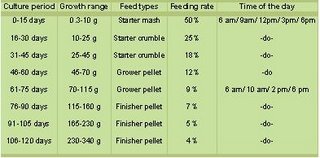
Milkfish weighing 30-45 grams are transferred to the grow-out cage where they are fed grower or juvenile pellet during the first month. Feed them finisher or adult pellet from the second month onwards.

For you to be able to monitor the growth of your fishes, sample at least 50 fishes every 15-days.
Clean your cages once a week and check for broken nets. They are harvested after 4 months of culture.

Feeding Schemes

By brackish water ponds

The milkfish can live on natural food like lab-lab, lumot, and plankton grown by fishfarmers using some techniques. You can grow lab-lab by drain the pond completely and dry it for 1-2 weeks until the soil cracks.

1. Don't expose it ot the sun too long, because it will make the soil hard and powdery. Destroy unwanted organism by spreading tobacco dust over the moist bottom, or by using ammonium sulfate fertilizer and lime.
2.Apply chicken manure at 2 tons/hectare. Floor to a depth barely covering the whole bottom and spread urea (45-0-0) at 15 kg/ha 2-3 days later. This will make the chicken manure breakdown faster.
3. Increase water slowly over a period of 1 months, at 3-5 cm each time until it reaches 30-40 cm deep. A sudden increase in water level will make the lab-lab float.
4. To increase lab-lab growth, apply inorganic fertilizer (16-20-0 or 18-46-0) at 50 kg/ha every 12-15 days. Get rid of snails by using molluscicide applied at 300-400 kg/ha, or collect snails and burn them. These snails destroys the lablab.

Grow-out operation

Transfer fingerlings to the pond as soon as it is ready for stocking. You can buy fingerlings from suppliers, or you may want to have a stunting pond nearby for enough supply of fingerlings all-year round. These fingerlings are normally held in hapa nets few before putting them in the pond, or stocking. If your stunting pond is nearby, you can transfer the fishes to the stocking pond through a canal, where there is flowing water, directly to the stocking pond.

For long distances, put the fingerlings in oxygenated bags. Stocking should be done at the cooler time of the day.

There can be around 5,000 fingerlings/hectare. 

Management

  • When the lab-lab start to decrease in number, add water to the pond to a level of 80-100 cm. Apply inorganic fertilizer (16-20-0) at 50 kg/ha every 1-2 weeks.
  • Coincide fertilizing during spring tide cycles. Replace about 1/3 of the amount of water every application of fertilizer. In hot months, you will need to put water more often in your pond because evaporation takes much of the pond water.
  • In rainy months, drain water from the top to preserve the saltiness of the water.
  • In the middle of the culture period, the lab-lab may be totally used up. At this point you can turn to artificial feeding. Give artificial feed at about 5% of the average body weight per day using commercial feed.
  • If your milkfish is stressed, they would swim in circles at the surface, and they appear to be gasping for breath. This stress can be caused by not enough dissolved oxygen.
  • Refill water at first opportunity. Splash it in a piece of wood to add oxygen. Be on the look out for bad weather conditions. Storms in the middle of hot months will cause changes in the temperature of the pond which may cause fish kills. 

Harvest and post-harvest
 
  • To gain the highest profit, culture period must be 60 days. The harvest is up to 2-2.5tons/ha.
  • The most common and undisputed technique in harvesting is the pasulang method, wherein the fish are made to swim against the current. Gather the fishes in a catching pond and use drag nets to collect them.
  • Scoop, wash, and stun the fishes in chilling tanks of boxes. If there are fishes left at the bottom, pick them by hand, and after stunning them by chilling, pack them in wooden or metal tubs (baeras) or baskets, or Styrofoam boxes filled with ice and transport them to the market of to dealers.
  • Bangus can be sold fresh, dried, smoked, deboned, pickled, or they can be sent to canneries for processing. 

Housing Facilities

  • Choose a good site to raise the bangus. Choose a place that it not polluted. It should also be free from floods, and is protected from strong winds and typhoons. The water should not fall below 1m in during low tide. An ideal temperature is 26-30C.
  • It will be extra help if the place is easy to access. This will be helpful once you start marketing your bangus. 
Cage design requirements

Net cages are the most economical to use. Sizes that are easy to manage are as follows:

10m x 10m x 2.5m = 100 sqm
15m x 15m x 2.5m = 225 sqm
20m x 20m x 2.5m = 400 sqm
25m x 20m x 2.5m = 500 sqm

The cages you have to use are the formation hapa, and the grow-out cage.

The net cage may be pegged to the mud bottom by wooden bamboo posts, or they can be floated at the water surface by bamboo raft or by plastic buoys. It should also be covered with nets to prevent the fishes from jumping of the cage.


Sources:Milkfish Cage Culture in Marine WaterBFAR National Brackishwater Aquaculture Technology Research Center; Semi-intensive Milkfish Culture in Brackish water ponds: SEAFDEC/AQD; Paggawa ng Tinapang Isda leaflet by BFAR-NIFTDC; www.da.gov.ph; photo from www.abtinnovia.com


 Nelson Perante

 Nelson Perante

 Nelson Perante

 Nelson Perante


Oct 4, 2022

Make cooking oil from coconuts

Coconut oil is one of the healthiest oil you can have. Coconut oil is edible oil from the meat of matured coconuts (Cocos nucifera). Throughout the tropical world, it has provided the primary source of fat in the diets of millions of people for generations. It has various applications in food, medicine, and industry.

For this purpose, a practical method for rural application and based on the subtractive method has been developed since it gives a high percentage of recovery of oil using ordinary household utensils.

Here is a detailed description of the process of making coconut oil:

Jul 3, 2022

How to Start a Meat Shop Business


If you are planning to set up a meat shop, as a starter it is best to look around your area, your subdivision or your community. How far is the market, and is there a nearby meat shop that is operating, or a possible competition? Investigate your market, how many households are in the area? This way you can somehow determine if you have a good market, and a possible steady number of buyers who will patronize your products. This will also help you decide whether the location you are planning to set up a meat shop is best.

The next step is to identify a steady source of your products i.e. meat supplier which ideally should include beef, pork, chicken and preserves/processed meats such as tocino, tapa, etc. at a price that can provide you a good profit margin. You can initially source your product from a secondary supplier, however if you have determined the volume you need, you can source your products from primary suppliers such as meat farms, poultry, or piggeries. Make sure that your supplier will provide you the products at reasonable and competitive prices.

Dec 2, 2020

How To Build Fiber Glass Boats

As a material for boat building, fiberglass has gained in popularity over wood and metal in both developed and developing countries, mainly because of the relative simplicity of construction, the ability to produce many identical hulls from a single mold, and the ease of maintenance of the boats themselves. Fiberglass boats are completely watertight, rot-proof and resistant to borers.

Disadvantages of fiberglass stem from the health risks associated with inhalation of fiber dust during construction, and the fact that the boats are slow to degrade and disposal at the end of their life is difficult.

Fiberglass is a term used to describe Fiber Reinforced Plastic (FRP), a material consisting of glass fiber impregnated with resin. Typically, a hard wearing surface is created with the use of a gel coat, strengthened by layers of fiberglass mat impregnated with resin. The required strength is achieved either by using several layers of mat or by using a thicker gauge of mat.

Materials and equipment