Jan 26, 2018

Profitable Ginger Farming

By Henrylito D. Tacio 

 GINGER is a crop that grows best in the Philippines. In fact, it is so versatile that it can be grown almost any part of the country. But in spite of its suitability to Philippine conditions, ginger is still a “neglected” crop. Few farmers plant it and their produce is not enough to meet domestic consumption. Big money awaits the entrepreneur who goes into production of good quality ginger. There is a big demand for ginger in special powdered form in Japan and Germany. In the domestic market, food factories engaged in meat canning and meat processing desperately need high-quality ginger. Sadly, local sources cannot meet the demand. 

 A study conducted by the small enterprise technology upgrading program (Set-up) of the Department of Science and Technology showed that a farmer with one hectare needs a capital of P141,490 for labor and inputs like seeds and fertilizer. On regular season, a farmer will have a gross income of P300,000 (at P10 per kilogram with 30 tons yield from one hectare). During off-season, the gross income is higher by P100,000 as the price of ginger increases to P20 per kilogram (although the production is 10 tons lower than those harvested during regular season). However, farmers who want to grow ginger should consult first the Department of Agriculture to determine the feasibility of the venture in their respective areas. Those intending to tap the export market may inquire the Department of Trade and Industry about the requirements and standards to be met. Ginger can be grown in flat to slightly rolling areas with well drained, light to medium textured soil high in organic matter and pH of 6.8-7.0. It can grow in elevations of up to 1,500 meters above sea level with about 200-300 centimeters annual rainfall every distributed throughout the year.
A farmer needs about 800 to 1,500 kilograms of seed pieces to plant a hectare. Ginger roots are stored under shade and covered with banana or coconut leaves. Only healthy rhizomes with sprouts or eyes are selected for planting. It takes eight to 10 months for ginger to be ready for harvest. The land must be thoroughly prepared. It is plowed and harrowed to pulverize the soil. Then beds, 30 centimeters high and one meter wide, of any length, are prepared. 

To prevent soil-borne diseases, the beds are sterilized by burning dried rice straw on bed surface three times. The beds are fertilized with complete fertilizer (12-24-12) at the rate of 400 kilograms per hectare at planting time, if soil is sandy. For clay loam soils, 300 kilograms of complete fertilizer are applied at planting time; at second and fourth month, another 400 kilograms of complete fertilizer are applied. Before planting, the seed pieces are washed in running water. Then, these are soaked for 10 to 15 minutes in a solution of acidulated mercuric bicholories (met 5.67 grams of mercuric bichloride in small porcelain cup field with hot water; mix with 5 gallons of water and add 180 ml. of concentrated hydrochloric acid). This treatment is done to protect seed pieces from pests. The seeds are cut into 20 to 50 gram sizes. The seed pieces are buried five centimeters deep, arranged in triangular pattern, 30 centimeters apart on each bed. After planting, the crop is watered thoroughly or the canals between beds are flooded. 

 Generally, ginger requires regular hand weeding during its growth period. One month after planting, hand weed is recommended. The frequency of subsequent weeding depends on weed density. To suppress weed growth, the plants may be mulched with coconut leaves or rice straw. When leaves are yellowing and withering, the crop is ready for harvest. However, harvest time depends on the requirements of consumers. For the local market, after 10 to 11 months; for pickling and salting, five to seven months; for dehydration, six to eight months; and for fresh ginger export, after seven to 10 months. Harvesting should be done before the rhizomes become fibrous or when the leaves or stalks are yellow and withering. Three men can harvest the crop. One digs up every hill with a spading fork; another pulls out the plants, shakes off the soil and lays them on the bed in wind rows; the third cuts off stems without breaking ginger bulbs. "Everything good is found in ginger," so goes a popular Indian proverb. It can be consumed fresh, dehydrated, powdered, or pickled. The Filipino traditional health drink called salabat is made from boiled fresh or powdered ginger. It also adds flavor to some common dishes like tinola, goto, arroz caldo, paksiw, batchoy, and pinakbet. Likewise, it is used as an ingredient in the manufacture of softdrinks and in the preparation of preserved. But what most Filipinos don't know is that ginger is also a medicinal plant. In the United States, ginger is "generally recognized safe" by the Food and Drug Administration, though it is not approved for the treatment or cure of any disease and is sold as an unregulated dietary supplement. 

 The Minnesota-based Mayo Foundation for Medical Education and Research recommends ginger for nausea and vomiting. “To prevent nausea after surgery,” it instructs, “ginger has been given as one gram by mouth one hour before surgery. For chemotherapy- induced nausea, capsules of ginger root powder have been given orally one gram per day for five days, starting on the first day of chemotherapy.” Ginger does not prevent morning sickness but it may help ease some of the nausea experienced by pregnant women, Australian researchers reported in the April 2004 issue of Obstetrics and Gynecology. Researchers from the University of South Australia in Adelaide gave nearly 300 women either 350 milligrams of ginger or 25 milligrams of vitamin B6 three times per day for three weeks. The researchers found that both ginger and vitamin B6, which is sometimes taken to counteract morning sickness, worked equally well at alleviating nausea symptoms. Some sources warn against higher doses in pregnancy due to concerns about mutations or abortion. "Supervision by a qualified healthcare professional is recommended for pregnant women considering the use of ginger," the Mayo Clinic suggests. 

 Mounting evidence suggests that ginger has natural anti-inflammatory properties. "And you don’t have to use a lot," said Dr. Neal Barnard, author of Foods That Fight Pain. "It works like ibuprofen, but without the side effects." Thing is, you need some ginger every day to feel the results. Slice a half-teaspoon to a teaspoon of fresh ginger and use it to flavor your stir-fry vegetables or sauces, or mix it with some boiling water and let it cool down before drinking. Now, here's a word of warning: Though generally recognized as safe, ginger can cause heartburn, bloating, gas, belching and nausea, particularly if taken in powdered form. Allergic reactions to ginger generally result in a rash. Individuals who have had ulcers, inflammatory bowel disease or blocked intestines may react badly to large quantities of fresh ginger. Ginger should not be used by children under two years of age. 


Published in the Sun.Star Davao newspaper on November 9, 2009.
Jan 23, 2018

Grouper (Lapu Lapu) Culture


Grouper (Lapu-lapu)
(Epinephelus spp.)

Locally known as lapu-lapu, grouper has been cultured in ponds and cages in Southeast Asia for more than a decade. It is one of the most expensive fish in the market and is valued because of its texture and taste as well as its great potential in the aquaculture market. The demand for grouper in the international market is fast growing particularly in Hongkong, Japan, and Singapore.

In the country, grouper culture in cages have been successful in Pres. Carlos Garcia, Bohol. The Sto. Rosario Fishermen's Association of this municipality has established market links with buyers based near Cebu City. The Cagay Multi-Purpose Cooperative in Roxas City has also been successful in culturing grouper. Raising grouper is therefore another significant earner for the country.

Grouper Species

There are about 40 species of groupers distributed in tropical water and there are 2 species cultured commercially. These are:

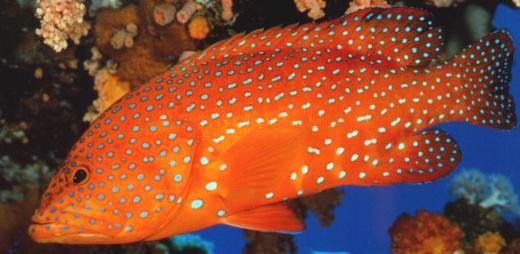
1. Epinephelus coioides or Orange-spotted grouper - They have yellowish-brown dorsal body, shaded to whitish on the side of the belly, and they have numerous brownish orange or brownish-yellow spots unevenly scattered on head, body and fins. Whitish or creamy white chin or underside of the head and belly.

2. Epinephelus malabaricus or Black-spotted grouper - Body color is light brown on the upper part o the body, belly and ventral side light grey. The body has 5 distinct broad dark brown oblique bars which tend to bend. The head and the body with numerous small well-separated blackish spots on the chin. The fins are also has small black spots.

Source of Stock

At present, supply of grouper fry for commercial cage/pond production still depends on the wild. However, institutes like SEAFDEC/AQD and other progressive finfish hatchery operators are refining their broodstock and production techniques.

Grouper fry are collected in nominal quantities using various devices, eg scare lines or brush piles. The size of fry varies from 1-9 cm and is collected by fish traps from coastal waters near mangrove areas. In the Philippines, the major source of grouper fry are in the provinces of Pangasinan, Cavite, Mindoro, Quezon, Masbate, Bulacan, Cagayan, south Cotabato, and Negros Occidental.

Site Selection

The site should:

a. Be in calm water like sheltered lagoons, coves, islets, bay, behind an island or a river mouth. This is to avoid damage caused by strong winds, waves and current.
b. Have salinity ranging between 32-34 ppt
c. Have water depth not less than 3 meters during low tide.
d. Have good water exchange to maintain good water quality
e. Be relatively free from any source of pollution and protected from environmental hazards such as typhoons, floods, erosions, etc. It must be accessible but secured from vandals and poachers.

Cage Specification

A floating cage is usually composed of 4-12 compartments supported by a framework. Consider the following when putting up a cage:

1. Cage frame - made of bamboo and durable enough to withstand stress caused by wave action and increased weight during culture operation.
Cage dimensions - it should be 5m x 5m x 3m x 3m x 3m x 3m.
2. Maintain water column at 2.5m
3. Sinkers - Use small concrete blocks as sinkers suspended by ropes, placed at the bottom of the 4 corners of the cage for rigging.
4. Catwalks - Attach lumber to the framework to serve as walks.
5. Floaters - Use plastic drums as floaters on each side of the cage between the bamboo pipes. Tie the drum to the cage frame using a rope 5 mm in diameter to stop the drum from drifting, especially during strong wave actions.

Cage Netting

Nets are placed like an inverted mosquito net or hapa. Each cage is supported with polyethylene rope (5 mm) inserted along the sewed borders of the net and held using a clove hitch with overhand knot.

Each cage should have double-layered nets to avoid loss of stock due to tearing and other mechanical damage.

Anchor

The rope length from the floater to the anchor should be the same as the water depth at high spring tide. The raft structure needs 14 concrete blocks (0.5 - 1 ton each) with 8 placed at the ebb end (ebb tide being stronger than flood tide), 4 at the flood end and 2 in the mid-section.

Shelter

Groupers need a place to hide; unlike other fishes. To provide a place for groupers to hide, use sawed-off bamboo, 5 cm in diameter and 15 cm in length (for nursery cages) and 10 cm in diameter and 30 cm in length (for grow-out cages) tied in triangular bundles and suspended in strategic areas inside the net cages.

Nursery Cage Operation

Use nursery cage for fry 2-10 cm long. Stocking rate should be 60-100 fish per cubic meter. Feeds include shrimps and/or finely chopped trash fish given at the rate of 10% of the average body weight per day. Divide the feeds equally and give 2-4 times each day.

Install a 50-watt incandescent lamp (hover type) inside the cages, about 0.5 m above the waterline at night to attract live food like mysids, copepods, and other smaller fishes.

Grow-out Cage Operation

Use a grow-out cage to stock sizes of more than 10-15 cm in total length. Stocking rate should be 30-60 fishes per cubic meter. Give trash fish at the rate of 5 percent of the average body weight per day. Divide the feeds equally and give twice a day.

Monitoring

Take a few samples of the stock every 15 days to determine feed requirement and growth rate of grouper stock. Scoop out 10-15 samples and measure the weight and length of each sample. Always inspect the nets for tears. Remove dirt, debris, and fouling organism attached to the nets. Repair or replace damaged nets.

Health Management

It is recognized that many diseases in fish culture are often associated with stress. Stressed fish can easily be infected with disease-causing agents and this affects growth. The following tips may minimize stress on fish and prevent disease outbreaks:

1. Observe any unusual swimming behavior, especially during dawn or late afternoon. Fish gasping for air usually indicates low levels of dissolved oxygen. Should this happen, thin-out stocks by transferring some of them into another compartment.

2. Weak fish - those refusing to school with other fishes and those losing balance while swimming should be separated from healthy stocks immediately. Stocks found to have sudden loss of appetite and with red spot-like wounds on the skin and fins are likely to have a bacterial infection. Use a Povidone-iodine solution (eg. Betadine solution) at 15 parts per million for 5-10 minutes for 3 alternate days, as an effective treatment for bacterial infection. Methylene blue can also be used by swabbing. Transfer treated fish to a new compartment.

3. Maintain a distance of 1 meter between compartments to ensure easy and continuous water flow and maintain ideal water quality for the fish.

Harvesting

Starve the fish 24 hours before harvesting. Harvest depends on the demand of the local and export market.

Post Harvest

Scoop live marketable size groupers (400 g and up) from the cage. Hold grouper temporarily inside the conditioning tank and provide aeration for about 1-2 hours. Adjust water temperature gradually to 18 degrees Celsius by adding packed ice. Place 3-5 fish inside an oxygenated double-sheet plastic bag, with water at 3-5 cm or at least covering the nostrils of the fishes. Place crushed ice on top of plastic bags to maintain the water coolness during transport.

Place plastic bags inside the styrofoam with carton cover having a tag "live fish" and then ready for transport.

Before transporting harvested stocks a "freshwater dip", or short bath in freshwater for 2-10 minutes is advisable. The dip will not increase parasite infection and lessen the incidence of disease and mortality during transport.


Source:Grouper Culture in Floating Cages BFAR; Livelihood Options for Coastal Communities, IIRR and SMISLE Publication; http://www.pinoyfarmer.com; photo from www.ukdivers.net.

Oct 24, 2017

How to Franchise Generika Drugstore


This is a franchise that would enable you to help a lot of people looking for cheaper and generic medicines. While earning a good profit for you drugstore business, you also help people access cheap medicine.


Why invest in a Generika Drugstore Franchise?

1. You are investing in an industry which represents a basic need of humanity. Health related expenses are going up worldwide, in virtually all countries. This industry, because it represents a daily need of people, is less subject to sudden market changes, effects of fashion and other short term trends, or strong seasonality effects (although there is also a yearly seasonality).

2. Factors such as the aging of population, modern illnesses such as diabetis, cardiac disorders, hypertension and the like, combined with the tropic Filipino weather and the deterioration of the natural environment (pollution, asthma…), will all contribute to an increase of the total drugs market spending in the coming years. The rapid growth of the Filipino population will increase this even further.

Jul 6, 2017

How to make smoked fish (Tinapa)


Ingredients and Equipment :

4 cups salt
Water
Strainer
Knife and chopping board
2 kilos fresh milkfish
Smokehouse

Procedure:

1. Wash and clean the fish thoroughly. Place in strainer to drain.

2. Cut and open the stomach. Remove the inwards. Wash and clean the insides
thoroughly. Set aside.

3. In a bowl, mix two cups of water to make the brine solution. For every two (2) kilos of fish, use one (1) cup salt with every three (3) cups of water. Soak fish in the brine solution.

4. Strain the brine solution through a piece of cloth to remove any solid particles.

5. Place the clean fish in the washbasin and pour the brine solution over it.

6. Cover the washbasin with a plate, press down plate for thirty (30) minutes.

7. Transfer the fish into the strainer to drain.

8. Prepare more brine solution. In a bowl, mix two 92) cups of salt with twelve(12) cups of water. Use one (1) cup of salt per six (6) cups of water for every kilo of fish.

9. Mix the brine solution well, strain contents into a saucepan through a cloth to remove any solid particles.

10. Bring the brine solution to a boil. Place the milkfish in a saucepan when solution starts to boil.

11. Boil the fish until its eyes turn white. Remove fish from saucepan. Drain until dry.

12. When dry, transfer the fish to a bamboo sieve (bistay). Cover with fishnet to protect against dirt, then sundry for thirty 30 to 45 minutes.

13. Fire charcoal, then place the coal embers in a smokehouse.

14. Cover the coals with sawdust. Sawdust will ensure proper smoking of the fish.

15. Place the bamboo sieve containing the fish inside the smokehouse. Cover the smokehouse to trap the smoke. Make sure that there are no holes or openings in the smokehouse.

16. Smoke the fish for 30 to 45 minutes.

Source: rdc5.gov.ph, photo courtesy of flickr.com

Apr 28, 2017

Production of Almaciga Resin

Almaciga (Agathis philippinensis Warb.) is utilized in the production of resin known in the world trade as almaciga resin or Manila copal. Almaciga resin is used in the manufacture of varnishes, lacquer, soap, paint, printing inks, linoleum, shoe polish, floor wax, plastic, water proofing materials, paper sizing and many other products. Locally, it is used as incense in religious ceremonies, as fuel, torches, caulking substances and smudge for mosquitoes. Although regarded as a minor forest product, it is one of the country's leading dollar earners. In 1997, the Philippine Forestry Statistics reported that 381,000 kg of almaciga resin valued at US$303,000 were exported. Almaciga tree grows in almost all mountainous forests, but most particularly in Quezon, Zambales, Palawan, Cagayan, Abra, Kalinga Apayao, Nueva Vizcaya, Samar, Zamboanga and Davao. High export quality products are those that come from Palawan and Quezon. There are two kinds of almaciga resin: the ground or fossil resin, and the surface or tapped resin. Fossil resin is the amber-coloured exudation from the roots. It is obtained by digging into the ground where the almaciga once grew. In contrast, surface resin is extracted by tapping a living almaciga tree. It is soft when fresh, but hardens over time as it flows freely and later turns to amber-coloured like the fossil resin. Between the methods, tapping is the easier way to produce Manila copal. 


 Procedures: 

 1. Almaciga tree with 35.5 cm. diameter can be tapped for resin. 
 2. The total length of the cut is about 1/3 of the total tree circumference. Each cut is 30 cm long and 1-12 cm wide with a 30 cm space between each cut. 
 3. More cuts could be made out of a big trees compared to small ones. A tree with 115-155 cm diameter maybe be cut 5-6 times while only one for smaller trees. 
 4. The quality of resin taken during summer is higher than those taken during season. 
 5. Resin has a higher quality if it is clean. Cut hardened resin into small pieces, soak in water for a week, then air dry. Grind firmly and place in 95% ethyl alcohol to melt. First class quality resin melts in 97% ethyl alcohol. 
 6. Almaciga trees grown in lowland produce more resin than those grown in the highlands. The bark from the lower part of the tree is soft and thick and produce more resin.


Source: elgu2.ncc.gov.ph, IMPROVED TAPPING OF ALMACIGA TREE FOR SUSTAINED RESIN YIELD, Mr. Arsenio B. Ella, Forest Products Research & Development Institute (FPRDI), LAGUNA, Philippines; photo courtesy of wikipedia.

Mar 15, 2016

Pinoy Negosyo Techs Directory -1

Best Oatmeal Recipe and Lasagne Recipe
How to make Ice Cream (Sorbetes)
Banana Recipes
How to make laundry, bath, herbal soaps using coco...
How to make skinless sausages
How to Make Chicken Tocino
How to Make Ice Cream
Herbal Soap Making Guide
Fish Farming Tilapia
How to Make Leche Flan
How to make siomai
How to make Coconut Macaroons
How to Start a Restaurant and Catering Business 
Banana Recipes
How to make Durian Pastillas and Candy
Madre de cacao as natural insecticide, repellent, ...
Duck Raising
SWOT analysis in business planning
Advantages and disadvantages of a family business
How to make Hopia 
How To Make Maja Blanca With Sweet Corn and Tocino..         
Nanotechnology in Paints and Coatings
Deboning Bangus (Milk Fish) and Recipes
Tilapia Hatchery Business
How To Make Coco Nectar/Syrup, Coco Sugar, Organic...
Kabute (mushroom) Farming
How to make banana chips
How to make Empanada
How to make Papaya Soap and other Herbal Soaps
How to make Guyabano Nectar and Ade
Eggplant Farming
How to Get a Trademark
How to Make Mango Puree, Chutney, Pastillas, etc.
Easy Recipes from Pinoy Negosyo Youtube Channel
How to make chorizo de bilbao
Tilapia Culture in Cages
How to set up a small coconut oil factory
How to Make Fruit Wine
How to make and cook Chinese-style ham and Quick-c..
Coconut Food Products (Processing)
Tomato Farming
How to Make Akapulko Ointment (Hot Process)
How to make Guava Wine and Guava Jelly 
How to Make Donuts
How to Make Flour From Bananas
How to make Coconut Cookies
How to Make Guyabano Nectar and Guyabano Ade
Mangosteen Farming
Quail (Pugo) Raising
Banana bread recipes and how to make banana flour
Making Beer
Soap Making by Cold Press
Swine(Hog) Production (Piggery)
How to Start a Waffle Business
How to make Burong Mangga, Chutney, Dehydrated Can...
How to Farm Ampalaya (Momordica Charantia L.)
How To Build Fiber Glass Boats 
How to Make Decorative and Novelty Candles and Wax...
JackFruit Processing
How to Set Up Your Business
How to Finance Your Business
How to make Chicken Ham
Starting a mud crab hatchery
Do You Have What It Takes to Be an Entrepreneur
How to Franchise Generika Drugstore
How to make Siopao
How to make Puto (Steamed Rice Cake)
Tips on Handling Difficult Customers
How to make Taho and Tokwa
How to make Corned Beef, Tapa, and Tocino
How to make Virgin Coconut Oil (VCO)
How to Plan Your Business
How to Make Flour from Cassava
How to make coco burger
How to make cooking oil from coconuts
How to make peanut butter and brittle
How to make fruit juices: Naranghita, Calamansi, M...
How to make vinegar from Banana Peelings
How to make Embutido
How to make Century Eggs
How to Make Fish Sausage
How to make puto kutsinta/cuchinta
How to make Soy Sauce
Making Pork Ham, Bacon and Chicken Ham
Processing Pork Meat: How to make Chicharon, Chori...
How to Make Banana Wine
Tips on buying second-hand products
How to make salted eggs
Franchising vs. Start-ups
Making Tocino, Longanisa, and Sausage
Hito (Catfish) Raising
Guide on how to get a franchise business
The Most Powerful Wealth Building Secrets Known
Jollibee Franchising
How to Start a Meat Shop Business
Beading Jewelry as a Home Based Business    
How to save money on webhosting
Squash Farming Guide
How to make Siopao
Bell Pepper Farming
Various Ways to Expand Your Business   
How to make Gumamela Tea or Hibiscus Tea
Finished Products and Raw Materials Suppliers Dire...
How to make or cook Cassava Cake 
How to find the right location for your business
Tips in Duck Breeding Operation 
How to be debt free?
About getting a business loan from banks 
How to set up a tilapia hatchery Business
Guidelines and Tips on Quail Raising
Home Based Meat Processing Technologies (Compiled)... 
Resin Lamination Guide
Tips on Personal Finance
Recycling of Plastics 
How to make Calamansi flavored candies, jellies, a...
Lanzones Production Technology
How to make onion, garlic, and chili powder