Nov 30, 2010

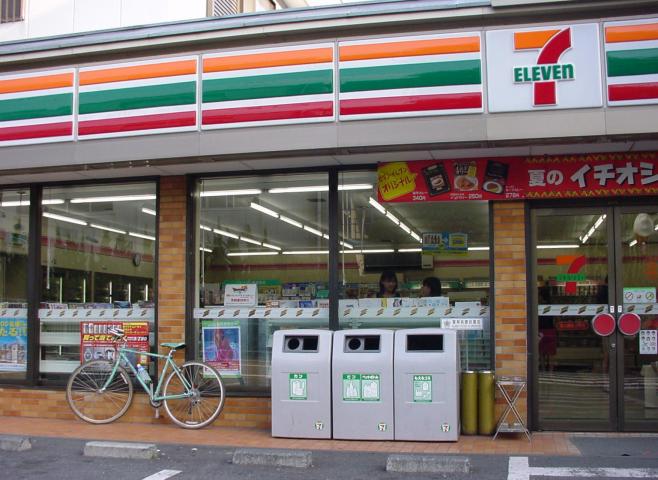
Franchising a 7-Eleven Store


7-Eleven® provides an opportunity for entrepreneurs and business partners to operate their own convenience store with the leading name in the business. If you are a goal-oriented individual who wants to grow with a well-established retailer, 7-Eleven invites you to take a look at what the 7-Eleven® franchise system has to offer.

7-Eleven® provides:

• a reliable, fresh assortment of high-quality products
• speedy transactions
• every day fair prices
• a clean, safe and friendly environment to shop.

Philippine Seven Corporation gives you the chance to operate your own business by having access to 7-Eleven® expertise, business operating systems and support of a highly successful global corporation.

You need determination to do it, the smarts to get it done, the power to motivate your employees and the financial commitment to make it all happen. It can be a rewarding experience for those willing to take the challenge.

7-Eleven® offers:

a. A popular and reliable global brand with a wholesome image. The top-of-mind convenience store among customers in the Philippines and the third most recognized brand in the world;
b. An established retail operating system proven over 20 years of retail experience;
Access to 7-Eleven®‘s logistics and distribution resources;
Continuous developmental marketing, product R&D, and operational support;
c. A comprehensive 6-week training program on the operation and management of a 7-Eleven® store;
d. Assigned Operations Field Consultant (OFC) who visits with the Franchisee at least once a week to provide counsel on every aspect of the business;
e. Monthly financial and marketing records prepared by 7-Eleven® for the franchisee

FAQs:

Q. What are the qualifications of a 7-Eleven® franchisee?
A. You love a good challenge, ready to put in hardwork, manage people and monitor finances, be a creative salesperson and help foster a shopping environment that entices your customers.

• A self-driven entrepreneur;
• Knows how to motivate his staff;
• Willing to directly oversee the operations of a 7-Eleven®
• Service oriented, hardworking and possess strong entrepreneurial skills
• Financially capable to fund the investment
• Must not and is not directly or indirectly engaged in any similar business in conflict with 7-Eleven®

Q. How much is the investment required for a 7-Eleven®?
A. The financial requirement ranges from P3 to P7 Million.

Q. What is included in the investment?
A. The investment includes the operational rights of the store, equipment and facilities, furniture and fixtures, air-con system, signage, and initial inventory.

Q. If I don't have a location can I apply for a franchise?
A. Yes, you can still apply. You will have the option to choose between a new store, and an existing store.

Q. Can a corporation apply for a franchise?
A. Yes, a corporation may apply the franchise, but it is the required that the majority shareholder be the principal applicant and attends the training.

Q. How much is the return on investment?
A. The convenience store profitability is dependent on several factors such as; satisfying customer’s needs; how well you implement and work the 7-Eleven® operating principles; sales performance; and your ability to control operating expenses. Other questions on financial viability will be discussed only during the interview process.

Q. What is the required lot size or floor area?
A. The floor area for a 7-Eleven® store is ideally 120 square meters.

Q. How long is the training program?
A. The franchisee is required to successfully complete a 6-week full time training program which is combined classroom and in-store.

Q. Who will provide the manpower to operate the store?
A. Store manpower salaries and benefits will be provided by the Franchisee

Property Conversion Program

Lease out your property or convert your existing business to a 7-Eleven® Store!

Are you a property owner or do you run a business with a prime location looking to leverage the strength of a global retailer for growth? There’s no time like the present to lease out or convert your business and franchise a 7-Eleven® Store, the Philippines’ leader in convenience store retailing.

7-Eleven® is looking for energetic property and business owners who share our passion for retailing and have a desire to serve customers. If you an existing business located in a prime location in any part of Metro Manila, and the major provinces, town proper, and thoroughfares in Luzon, we would like to discuss this business opportunity with you!

Minimum requirements include:

located in a prime location such as business and call center districts, transit stations, factory, residential and schools areas
Preferably a corner location with double frontage, or a non-corner location with a 7 meter frontage

Qualifications:

You need to be an ambitious, entrepreneurial person who is willing to assume the risks - and reap the rewards of owning your own business.

Our company seeks the right individual who will operate selected 7-Eleven® Foodstore:

1. Ability to fund investment requirement
2. Willing to undergo full-time, 6 weeks training
3. Willing to devote time to oversee day to day operations
4. Willingness to work within the franchisor's guidance
5. Ready to put hardwork, manage people, monitor finances, and be a creative salesperson and help foster a shopping environment that entices your customers.
6. Must not and is not directly or indirectly engaged in any similar business in conflict with 7-Eleven®
If you are the entrepreneur described above, then we may interest you to be our partner by operating a 7-Eleven® Foodstore.

We will support you with the expert advice and assistance only a trusted industry leader can give. Our vast array of operations, marketing, and technical support systems are based on our retail experience spanning over 20 years, serving thousands of customers in 269 stores, 24 hours daily.

For more information contact Philippine Seven Corporation and an application will be forwarded to you:

CONTACT INFORMATION

The Franchise Manager
Philippine Seven Corporation
7th Floor, Columbia Tower,
Ortigas Ave., near corner EDSA,
Mandaluyong City
Philippines
Hotline: +63 (02)726-9968
Fax : +63 (02)705-5229
Mobile : +63 (920)950-8651
email: franchising@7-eleven.com.ph

Source: http://www.7-eleven.com.ph/;Photo from: www.imasy.or.jp

Nov 28, 2010

How to get a BFAD License


BFAD is the government agency that protect public health and ensure the safety, efficacy, purity and quality of all the products it regulates through the effective and efficient implementation of national policies consistent with international best practices.

BFAD services includes providing license to operate (LTO), Product Registration, and Laboratory Services, among others.

An establishment intending to engage in the importation, exportation, distribution, and manufacture and re-packing of products regulated by BFAD, must have a LICENSE TO OPERATE (LTO) prior to start of or for continued operations. The processing of applications for the initial issuance, renewal or amendment of the License to Operate of establishments is referred to as ESTABLISHMENT LICENSING.

BFAD establishes the identification and circumstances of the legal entity applying for the license and conducts site inspection to evaluate the capability of the establishment to engage in its stated activities, in compliance with BFAD standards and requirements

How to Apply for a License to Operate (LTO)

REGISTRATION FOR NEW CLIENTS

1. Is this the first time you will transact with BFAD? Register at the Client Management Console to get your account number and gain access to the web portal of BFAD. This is where you will regularly transact with BFAD after registration.

2. After registration, you may apply for initial issuance of LTO through the Client Management Console.

APPLICATION

STEP 1. Classify your product(s)

Products regulated by BFAD fall under any of the following PRODUCT CLASSES:

DRUGS
MEDICAL DEVICES
DIAGNOSTIC RE-AGENTS
FOOD
COSMETICS
HOUSEHOLD HAZARDOUS SUBSTANCES

STEP 2. Classify your establishment.

Based on activities the establishment is engaged in, the establishment can be classified under any of the following establishment categories:

ESTABLISHMENT CATEGORY ACTIVITIES

Manufacturer Purchases Raw Materials and Packaging Materials

Produces the product (in own plant or outsourced to a toll manufacturer)

Packs finished products
Maintains inventory of input materials, goods-in-process, and finished products

Distributes finished products

Distributor Purchases finished products

Distributes finished products

Retail Outlet (Drug Outlets only)

* Drugstores (private or government)
* Hospital Pharmacies (private or government)
* Retail Outlet of Non-prescription Drugs

Purchases finished products or compounds and dispenses prescription and/or non-prescription drugs

Your establishment can be further classified based on additional activities that make the establishment fall under any or all of the following establishment types.

ESTABLISHMENT TYPE ADDITIONAL ACTIVITIES

Importer

Purchases products from foreign suppliers (referred to as “sources”), whether:

* Raw materials and packaging materials of manufacturers or
* Finished products of distributors

The country where the source operates is referred to as “country of origin”.

Exporter

Distributes or sells products to foreign buyers

The country where the buyer operates is referred to as “country of destination”

Wholesaler

Purchases finished products from local suppliers and/or distributes or sells the products to local buyers

STEP 3. Determine the LTO Type required by your establishment.

LTO type is determined by the product class plus the establishment category and the establishment type.

For example, your establishment may need the LTO of a

Food distributor/importer

Food manufacturer/exporter

Drug manufacturer

Cosmetics Distributor/importer/wholesaler

STEP 4. After determining the LTO Type, determine the type of application you shall apply for:

TRANSACTION TYPE DEFINITION
Initial Issuance of LTO Issuance of License to Operate prior to opening of the establishment and start of operations

Renewal of LTO Extension of validity of the LTO after inspection and approval of BFAD

Amendment of LTO Re-issuance of LTO to reflect changes in circumstance of the establishment, after approval of BFAD

Change in ownership

Change in Establishment Name

Transfer of location of facilities

Addition or deletion of activities

Addition or deletion of products

Addition or deletion of sources

Change in name and address of sources

Replacement of lost LTO


STEP 5. Submit application online and pay processing fees

Now you are ready to access the applicable set of checklist of requirements, fees, and laws and regulations for the LTO type and transaction type you will apply for.

Prepare your application documents and apply online through the Client Management Console.

Pay through the payment option most convenient for you.

----

There website is found at http://www.bfad.gov.ph

Source: www.entrepreneur.com.ph

How to Process Rice Straw into Livestock Feed


Fresh rice straw has a high energy content, but its use as feed for ruminants is limited by the high levels of lignin and silica in the straw. These make it difficult for livestock to digest.

By processing the rice straw, its quality and digestibility can be improved. Processing can also increase the protein content of rice straw.

It is recommended to process rice straw by applying urea (ammoniation). The technology is best suited to small or medium-sized farms. Farmers in Indonesia use the ammoniated straw to provide animal feed in the dry season or as a feed supplement.

How to Process Rice Straw into Livestock Feed

Materials

* Around 15 kg of air-dried rice straw
* About 870 g urea
* Five liters of water

Equipment

* Two plastic bags, each c. 0.4 mm thick and measuring 100 x 150 cm
* One pail or bucket
* One set of scales
* One mixer stick

Procedure

* Put one plastic bag inside the other to make a double thickness. The double bag is stronger and is less likely to leak.
* Put 15 kg of air-dried rice straw inside the bag. Compact the rice straw by pressing it down with your hands.
* The 870 g urea is dissolved in a pail containing 5 liters of water. Stir the mixture well.
* Pour the urea solution into the plastic bag of rice straw.
* Close the inner plastic bag by binding the mouth Tie the opening of the outer plastic bag separately. Put the bag of straw in a safe place.
* The bag can be opened after one month. The mouth of the bag should be left open to expose the straw to the air for two days. It can then be used as livestock feed.

Using the Processed Straw As a Feed

The processed rice straw is usually fed to cattle in the evening, as a feed supplement, after they have been brought into their shed. To increase the palatability, sweet soy sauce or molasses may be added. If the cattle are not used to this kind of feed, add just a little (5%) to their daily feed. Once the cattle become used to the ammoniated rice straw, it can make up 60-100% of their feed intake.

Source:agnet.org

Oct 23, 2010

How to grow Organic Mango

REX A. RIVERA, Agronomist

1.Distance mango far apart to allow full sunlight and free flow of air. (20x20 meters quincunx will give 50 hills per hectare.)

2.Practice clean culture. Keep weeds and grasses short. Grow creeping leguminous cover crop to protect soil and beneficial microorganisms.

3.Cultivate and plow the soil at least once a year to aerate and prune off roots at the surface that are sensitive to heat and dry spell.

4.Drench with BMO (Beneficial Micro Organism) and HOC (Herbal Organic Concentrate) the compost and organic materials. Spread organic fertilizer and decompose farm waste before plowing and cultivation so the organic materials will be incorporated in the soil.

5.Prune and remove diseased and infested branches and other plant parts and bring debris to compost pile. Chop are shred them to small pieces for faster decomposition. The compost pile is drench with BMO and covered.

6.Provide enough water and keep soil moisture adequate at all times. Cover crops and mulching will help maintain soil moisture especially during summer months. However, less moisture is required two (2) weeks before flower induction and one (1) month during fruit maturation (100 to 130 days from flower induction.

7.When the leaves are mature and the flower buds are ready evidence by plump and pointed bud tips (about 7 to 9 months from flushing), the tree may by induced to flower. The types of natural flower induction are:

a.Smudging or smoking the tree.

b.Spraying Herbal and Mineral concentrate (Substitute to KNO3)

8.Before and after flower induction, drench the whole tree from soil, trunk, branches to the leaves with HOC-4n1 (Herbal Organic Concentrate) to drive away insect pest especially mango hoppers to prevent them from laying eggs on emerging flower after bud break.

9.The most critical period on mango production is from flower induction up to 45 day the period of flowering, blooming, and fruit formation and development.

10.Smoking and spraying HOC every 3 to 5 days up to 18 days from flower induction will greatly help in repelling insect pest and curing diseases. Do not spray or disturb the flowers during bloom and pollination. Insect pollinators should be encouraged to come. This is at 20 to 40 days after flower induction.

11.If it rains during the flowering and fruit formation, Spray HOC-3n1 (Fungicide) immediately after the rain. Gently shake branches to remove water droplets on flowers as this is a good medium for growth and development of anthracnose and other fungal diseases.

12.At 45 to 90 days Spray HOC-4n1 and HOC-GO alternately once a week to help in fruit development and prevent insect infestation.

13.At 60 to 70 days bag the good fruits candidate for export. Leave alone the partly damaged or deformed fruits as these will be for domestic market or for processing. This will greatly reduce your bagging cost and labor expense.

14.Allow the fruits to fully mature at 120 to 130 days to gain full sweetness and aromatic odor. Fully mature fruits command a better price.

15.Before harvesting, see to it that you have all the harvesting tools, equipment, containers and a packing shed close or within the farm.

16.Give proper instructions and guidance to your workers and harvesters before sending them off to harvest. Make them remember that every single fruit has value and they should handle them with care, avoiding bumps and bruising.

17.Have a separate group of workers, especially trained to sort, grade, package and scale the fruits. Another group at the packing house will do the washing, hot water dip treatment, air drying, final sorting or grading, packing and weighing to be transported to market destinations.

18.After harvest, a new cycle of tree management start. This will be the rejuvenation stage from post harvest to flower induction. A period of 7 to 9 months.

19.The trees are prunes and sanitized by clearing the surrounding and drenching the whole tree with HOC-4n1.

20.Spread the organic fertilizer and decompose farm waste materials.

21.Plow under and cultivate the soil from under and outside canopy cover. Follow this by harrowing to pulverize and level the soil.

22.Water the trees and spray HOC-GO to initiate new flushing. Two to four new shoots will emerge which will be potential bearing buds.

23.During flushing, spray HOC-4n1 at 5 to 7 days interval. The young leaves are very susceptible to anthracnose infection and insect pest attack being soft and tender.

24.Provide adequate water at all times, and keep down the weeds by slashing.

25.Monitor the trees until they are ready for another flower induction.

End of cycle

Other Interventions:

1.Preferably, intercrop between mango trees with low growing high value seasonal crops such as vegetables, grain, legumes, root crops and spices.

2.Maintain a mini forest for bird sanctuary and other wild life and bio diversity to complement the needed balance of nature ecosystem.

3.Grow a wide range of herbal plants that will help in pest and disease control.

4.Raise poultry and livestock to augment your farm income and provide you with rich animal waste for organic fertilizer conversion.

5.Avoid as much as possible burning and application of toxic chemicals as this will kill the beneficial life in the soil and in the farm.

6.Visit your farm regularly. The foot prints of the owner are the best fertilizer.

Photo courtesy of http://macsystems.com

Sep 9, 2010

Tips on Saving Money


Want to stop living from paycheck to paycheck? Read on and start saving today.

Steps:

1. Figure out what you need to save for and how much you need to save. For short-term goals, this is easy. If you want to buy a video game, find out how much it costs; if you want to buy a house, determine how much of a down payment you’ll need. For long-term goals, such as retirement, you’ll need to do a lot more planning (figuring out how much money you’ll need to live comfortably for 20 or 30 years after you stop working), and you’ll also need to figure out how investments will help you achieve your goals.

2. Set savings goals. Once you determine how much you need to save, establish a timeframe (i.e. “I want to be able to buy a house two years from today.”) Set a particular date for accomplishing shorter-term goals, and make sure the goal is attainable within that time period. If it’s not attainable, you’ll just get discouraged.

3. Figure out how much you’ll have to save per week, per month, or per paycheck to attain each of your savings goals. Take each thing you want to save for and figure out how much you need to start saving now. For most savings goals, it’s best to save the same amount each period. For example, if you want to put a $20,000 down payment on a home in 36 months (three years), you’ll need to save about $550 per month every month.

4. Add together the installment amounts (monthly, weekly, or per paycheck) for all your savings goals. Can you afford to save this total each period? If so, great; if not, proceed to the next step.
Keep a record of your expenses. Write down everything you spend your money on for a couple weeks or a month. Be as detailed as possible, and try not to leave out small purchases.
See where you can trim your expenses. You’ll probably be surprised when you look back at your record of expenses: $300 on ice cream, $100 on parking tickets? You’ll likely see some obvious cuts you can make. Depending on how much you need to save, however, you may need to make some difficult decisions. Think about your priorities, and make cuts you can live with.

5. Reassess your savings goals. If there’s absolutely no way you can fit all your savings goals into your budget, take a look at what you’re saving for and cut the less important things or adjust the timeframe. Maybe you need to put off buying a new car for another year, or maybe you don’t really need a big-screen TV that bad.

6. Make a budget. Once you’ve managed to balance your earnings with your savings goals and spending, write down a budget so you’ll know each month or each paycheck how much you can spend on any given thing or category of things. Try to leave a little room for minor unexpected expenses.

7. Stick to your budget. A budget won’t do you any good if you don’t follow it religiously. Build some self-discipline, and remember why you’re on a budget in the first place.
Pay yourself first. Savings should be your priority, so don’t just say that you’ll save whatever’s left over at the end of the month. Deposit savings into an account (or your piggybank) as soon as you get paid.

8. Open an interest-bearing savings account. It’s a lot easier to keep track of your savings if you have them separate from your spending money. You can also usually get better interest on savings accounts than on checking accounts (if you get interest on your checking account at all). Consider higher-interest options such as CDs or money-market accounts for longer savings goals. Shop around for the best interest rates on an account that fits your budget and liquidity (how quickly you need the money) needs. For very long-term goals, such as retirement, you’ll need to develop an investment strategy, not just a savings plan.

9. Consider automatic deductions from your paycheck. Many employers allow you to deduct savings from your paycheck. The money is directly deposited in your savings account so you never even see it on your paycheck. You can also have investments for retirement taken directly out of your pay, and the taxes may be deferred with this option.

Tips


a. If your savings timeframe is very long, such as that for retirement, you may want to structure your monthly savings so that they grow larger later in life when you will (hopefully) have more income coming in.

b. If unexpected expenses cause you to deviate from your budget from time to time, cut unnecessary expenses before you cut money from your savings goals. Other than the bare necessities, your savings goals should be your top priority.

c. In this day and age, many of us have cars, so saving money on gas can contribute to your effort considerably. Consider getting rid of the car altogether if you can. See the related wikiHows for more information.

d. If unexpected circumstances render you unable to meet your savings goals, reassess them and figure out which ones you can delay or cut out. Get back on your program as soon as you can.

e. For very important or very large savings goals (such as a down payment on a house or saving for your kids’ college tuition), consider opening up a separate account. You’ll be able to keep better track of that particular goal, and you’ll be less tempted to dip into it.

f. If you receive unexpected cash, put all or most of it into your savings, but continue to set aside your regularly scheduled amount as well. You’ll simply reach your savings goals sooner.

g. If you no longer have a regular expense, such as when you pay off your car or home, set aside that money into savings. You’ll be paying yourself instead of somebody else.

h. Make paying off high-interest credit card and loan balances a top priority. You can’t really save money when you’re needlessly wasting it on finance charges.

i. Buy a piggy bank for your coins. Coins and change may look insignificant but when accumulted overtime they can help you save.

Warnings

  • Never loan cash to others that you cannot afford not to get back.
  • Never borrow money that you cannot repay.
  • Do not go out "window shopping" with any money on you. You will only be tempted to spend money you cannot afford to lose.
  • Be sure to keep track of automatic deductions from your paycheck. Sometimes mistakes happen, and if you’re not paying attention, you might not get all your money.

Source: http://www.wikihow.com/Save-Money

Aug 25, 2010

Duck Raising Guide


We have another(earlier) post about duck raising. This post is just a variation or a continuation of our previous post on duck raising.

Duck raising is a lucrative livestock industry in the Philippines because of its egg. Its most important product, the balut (boiled incubated duck’s egg), is sold daily throughout the archipelago for its delicious flavor and nutritive value.

Duck raising is especially recommended in baytowns like those bordering the shores of Laguna de Bay, where there are abundant supplies of fresh water snails which make good for the duck food.

Ducks are generally raised for eggs but when snail food gets scarce, they are sold for meat.

Kinds of Ducks

Native Pateros Duck

The native pateros duck commonly called itik, is the most popularly raised locally. Although smaller than imported breeds, they are good layers and non-sitters. Their eggs are large.

Its predominant colors are black and gray. Some are barred (bulek) others are brown or have white feathers mixed with black/green. Males have coarser heads and heavier bodies than females. Males emit shrill high pitch sounds. They have curly feathers on top of their tails.

Females emit low pitch quacking sounds. Their tails feathers lie flat or close to the bodies.

In all commercial ducks hatcheries, determining the sex of duckling is done at the age of 2 to 3 days.

Khaki Campbell Duck

Khaki Campbell ducks have characteristic brown color, have extremely active habits, do well in good range and show a little desire for swimming.

These ducks are good layers, they lay as many as 300 or more eggs a year which are fairly large, thick-shelled and weigh 70 to 75 grams each.

Commercial Hybrid Duck

The world’s first hybrid egg-type duck known as cv2000 was developed at cherry valley farms, England. It has white plumage and lays its egg at about 20 weeks of age. The body weight at point of lay is about 1.5kg. On the average this duck could lay 285 eggs up to 72 weeks of age with a mean egg weight of 75 kg. This duck can be distinguished by their pure white feathers. Their eggs are either white or greenish.

Indian Runner

This breed originated from the east indies but its egg production capability was developed in western Europe.

This duck assumes very erect normal postures which are almost straight neck. The back is long, straight and narrow. An adult weighs about 2.10kg while an adult duck weigh about 1.8 kg. The egg production characteristics of this breed resemble that of the Khaki Campbell.

Tsaiya

This breed is developed in Taiwan. The original color ranges from black neck to pure white. Due to farmers preference, the brown breed was selected and raised as major variety, while the white variety was developed for the production of mule ducks

Muscovy Duck

Muscovy duck (pato) is easily identified by its carunculated face or red, knobby nodules along the eyes and above the base of the bill.

Muscovy duck is a heavy breed. It has plump body and yellow skin. It has three varieties: the white, the colored and the blue Muscovy duck.

Unlike other breeds, Muscovy duck prefer to stay on land. They are good forgers, so they require less care and can subsist on what they can pick up in the field supplemented on with palay and corn.

Muscovy duck has low egg production but is more self-sustaining than Pateros duck. It hatches her eggs in 33 to 35 days.

The objection to this breed (Muscovy duck) is its tendency to fly far away from home and get lost. It is therefore necessary to clip their flight feathers regularly. Clip only those of one wings to remove the birds balance in flying.

Pekin Duck

Pekin duck is native in China belonging to the meat type of ducks. Sometimes it is mistaken for a goose because it carries its body rather upright. It is docile and well-adapted to Philippine climate.

Pekin ducks are good layers, and duckling are ready for market at 2 to 3 months old.

Duck Housing

Build your duck housing in a quiet, cool place and near as possible to stream or pond. Local materials like bamboo, nipa and cogon are cool.

Prepare each duck with atleast 3 to 4 square feet floor space. Cover the floor with rice hull, corn cobs, peanut hulls or similar materials to keep it dry and clean and help prevent spread of pests and diseases. A house of 100 ducks measures 4 x 4 meters high or high enough to let a man stand inside.

You may provide a swimming pond 10 ft wide and 20 ft long for 50 birds. However the pond is not necessary in duck raising as they lay just as many eggs without it.

House ducks are grouped according to size or age to facilitate management and to avoid quarrels which is common among ducks of different ages. Older ducks tend to push out younger ones from feeding troughs.

Separate duck houses from one another by bamboo fences low enough to go over them from one pen to another. Fence should extend down to the shallow edge of the water to prevent ducks from straying away to far.

Selection and Mating

Select vigorous breeding stock. Select breeders when birds are about 8 weeks old, and again at 4 to 5 months old before they are placed in breeding pens.

Eggs for hatching purposes should come from ducks not less than 7 months old to ensure better fertility, hatchability and livability of baby ducks offspring.

Drakes (male ducks) should have the same age as ducks or even a month older. They should be raised separately from ducks. They are put together only when ready for mating.

One drake may be mated to 6 to 10 ducks. Heavier breeds however should have a closer ratio of males to females than light breeds.

Pateros ducks start laying when they are 4 to 6 months old. Muscovy and Peking ducks start laying at 6 to 7 months old.

Hatching

The period of incubation for duck eggs is 28 days, except Muscovy which is 30-35 days. Breeds of ducks that have high degree of laying are non-sitters and their eggs are hatch through artificial incubation.

The Muscovy is a natural mother. She hatches and breeds her own baby ducks/duckling with none or little assistance from man. Native or pateros duck is a non sitter, so her eggs are incubated under the native method of incubation called balutan.

Feeding Practices

Feed duckling (baby ducks) with wet starter mash for 8 weeks. Native ducklings raised the native way are fed moistened boiled rice for the first 33 weeks, 4 to 5 times a day. During the first few days, give feed at night. Start giving water in drinking trough or drinking fountains on the 2nd day. On the fifth day, add finely chopped small shrimps to boiled rice. Increase their feed as duckling (baby ducks) grows.

At the age of one month, feed ducklings with tiny fresh water snails and boiled unhulled rice or palay. Give only enough feed to be consumed as they tend to spoil when left long in the troughs.

Mash feed for ducklings is composed of corn, soybean meal fish meal dried whey rice bran with oyster shell and bone meal with vitamin mineral supplements. Feed one day to six (6) weeks old ducklings with starter mash with 21% crude protein for six (60) to four (4) month old duckling with grower mash with 16% crude protein and four (4) months old ducks and above with layer mash or ratio with 16% crude protein.

If mash feed is preferred give only enough to be consumed quickly at one time to ten (10) to 15 minutes. Wet mash tends to spoil when left long in hoppers. If feeds is given at intervals, ducklings learn to eat more readily and their appetites are developed to stuff themselves in between drinks, digest food quickly and be ready to eat their fill for the next feeding time.

Four to five feeding a day are sufficient for ducklings over 2 weeks old. Provide plenty of clean fresh water as ducks drink after every mouthful of food.

Ducks are wasteful and slovenly while feeding. Provide proper and adequate feeding hoopers to prevent much waste of food.

Fine gravel of grit is necessary to growing ducks to help them grind their feed. After the 5th week give green feed such as chopped leaves of kangkong camote ipil ipil and legumes at least three (3) times a day 10grams of chopped green leaves per duck per day.
Health and Diseases

Ducks are more resistant to diseases than chicken and other fowls. Losses from various causes can be minimized through proper management adequate appropriate feeding and housing strict sanitary practices and effective prevention medication and vaccination program. However even with all precautionary measures substantial losses are incurred in duck farming operation due to various causes. Duck diseases are those caused by pathogenic viruses bacteria fungi and parasites while non-infectious types are due to chemical poisons toxins inferior feed or ration and environmental factors.
References: Livestock Development Council (LDC)