Jan 10, 2019

How to Make Guyabano Nectar & Ade: Is Guyabano a Miracle Cure For Cancer


Recently, Guyabano was reported as one of the fruits that provide miracles to cancer patients. In an article written by EDUARDO GONZALES, MD (See below for excerpts); he said

The idea that graviola (Guyabano) is an effective cancer fighter evidently stems from research (published in 2008) conducted at the Purdue University’s School of Pharmacy and Pharmaceutical Sciences on the unique substances known as annonaceousacetogenins that have been extracted from the graviola tree. The Purdue investigators found these substances to be potent inhibitors of cancer cells while leaving normal cells alone. They also found the compounds to be effective against drug-resistant cancer cells.
So lets make these recipes and be healthy. 


How to make Guyabano Nectar
Jan 8, 2019

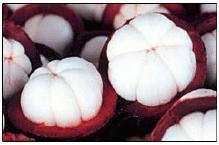
Mangosteen Farming

MANGOSTEEN (Garcinia mangostana Linn of the family Gutiiferae) is one of the most delicious and best flavored fruits in the world. It is one tropical fruit that is most ready accepted by the West. It is a seasonal fruit that has a great export market. The eatable portion of the mangosteen fruit is 1/3 of the whole fruit. The aril is about 25-30% of the fruit and contains 19.8% soluble solids, 4.3% reducing sugar, and 17.5% to total sugar. Analysis of the rind indicates that it is rich in pectin.

Uses and Food Value
Its composition taken from the 1990 edition of the Food Composition Table prepared by the Food and Nutrition Research Institute is as follows. The pulp, which is very light and soft and has an exquisite flavor, is best eaten fresh, preferably after chilling the fruit. The pulp and seed, when boiled with sugar, make an excellent preserve or topping for ice cream or sherbet. The seeds have a delicious nutty flavor. The leaves and bark, claimed to be medicinal, are used as astringent to cure aphtha or thrush. They are also used as antipyretic while the pericarp is regarded as very effective in curing chronic intestinal catarrach. The pericarp contains 7-15% tannin and it is used for dyeing. A decoction of the root may be taken to achieve regular menstruation. Leaf infusion is applied to wounds and a decoction of the pericarp may be administered to cure dysentery or simply used as a lotion. Dried rind is used as an astringent. The seed contains about 30% valuable oil.

Jan 7, 2019

Quail or Pugo Raising


The quail has many advantages in comparison to any other small animal for home food production. The females begin to lay eggs at average of six weeks of age, and continue to produce eggs economically for at least a year. The extra males can be killed for meat at the age of 6 weeks. Even older animals are easy to butcher and can be prepared for food in a variety of ways. Birds need only a small amount of space. A cage permitting each bird 225 cm2 of floor space (44 birds per square meter) is the minimum requirement. The cage need not be more than 15 cm in height. Quail are efficient converters of feed. With each egg a female deposits an edible package of 8 percent of her own body weight (compared to 3 percent in the case of chickens).


On the other hand, quail have some disadvantages. The shrill crowing of the males can be disturbing. When males and females are mixed some males will peck at others so severely that they will blind them and eventually kill them. If not cleaned daily the cages can produce an odor. Quail are susceptible to some pests, parasites, and diseases that plague other poultry. Quail age more rapidly than other fowl and laying birds should be replaced each year. The chicks are quite small and tender, and easily destroyed by very small imperfections in their environment. They need to be protected in a brooder for 3 full weeks in the tropics. Once mature birds escape from cages they are difficult to recapture. During the short days of winter quail need supplementary lighting to keep them to keep them laying. A quail production system must take into account all of these points.

Below is a guide to Quail production:

1. Start with a pair that is 30-35 days old, with smooth feathers, and without streaks of white or black.

2. The pair must be of same stock. A Japanese quail weighs 100 grams at age 30-35 days, and 120 grams at 60 days. The older, the heavier.