Coco means it is from coconut. Although further study is needed to verify, and validate the medicinal properties of coco sugar and coco honey, there are some interesting information I got in an email and from sources such as DOST/FNRI. Some interesting information about coco sugar and coco honey are as follows:
Coco sugar and coco honey have low glycemic index, a measurement on blood sugar, thus good for diabetics and those having prostate problems. It has also glutamic acid, the same ingredient present in "Viagra."
Tests done by the Food and Nutrition Research Institute (FNRI) and Department of Science and Technology (DOST) of the Philippines has revealed a low glycemic index (GI) of 35 for coco sugar compared to that of cane sugar's glycemic index of 50. Glycemic index according to a scientist from Food and Nutrition Research Institute, is the glucose response of an individual from food relative to a standard glucose solution. Low glucose index food is good for proper control of diabetes mellitus and it has shown to lower LDL (low density lipoprotein) cholesterol, also known as bad cholesterol. It has been noted that it is also good for weight maintenance, thus preventing obesity or being overweight.
Tapping & harvesting of toddy
Tapping is done twice a day. Harvesting of toddy can be done in morning ( taken before 8 am ) for the production of ‘tuba’ or vinegar while for the production of fresh sap drink, nectar and sugar, it is best to used the afternoon harvest ( taken not later than 3 pm ) which is sweeter than the morning harvest. To produce sweet toddy, it is necessary that all tools and containers to be used should be clean at all times. Adding of lime to the receptacle prevents the sap from fermentation.
Toddy processing
The conversion of toddy into sap drink, coco nectar and sugar involves a simple operation. As the coconut sap is highly perishable due to the yeast microflora, the harvested sap should be immediately processed by boiling for 1/2 hour in a large cast iron pan. This process prevents the sap from fermentation.
Coco Honey
Further boiling of toddy until it reaches 110 C temperature or sticky under a moderate to very low heat. The sticky liquid shall be allowed to cool then poured into a desired container.
Coco Sugar
Boil coco sap to evaporate the water under moderate heat with occasional stirring until liquid thickens at 115 C. Remove it from the flame when it begins to become very sticky. Continue mixing until it becomes granular. Air dry the brown sugar before placing them in a packaging material.
Photo courtesy of www.ecplaza.net, and www.healthbolt.net. Source: www.pca.da.gov.ph for additional references, check the following publications:
Sequential Coconut Toddy and Nut Production (SCTNP) Technology, TechoGuide Sheet No. 1, PCA, Agric. R&D Branch, Davao Research Center; Naka,Peyanoot.1996. Potential of producing sugar from Coconut. In Promoting Multi- Purpose uses & Competitiveness of the coconut. Proceedings 26-29 Sept 1996 IPGRI; Ticson, S.G., Sancha, L.V., Magat S.S. Sugar from Coconut Sap in Relation to Nut Production:A Review. Diliman, Quezon City: ARDB, 1997. 53p. (R&D Tech.l Report No.4)
I can’t help but be amazed on how much sales a food cart business gets in a day. For example, on the entrance of Ever Gotesco in the Marcos Highway customers on a Siomai Food Cart were falling in line to buy, almost. IMO, earnings could probably compete with established food chains on a lower scale. Indeed, more than P1 billion in sales is turned over every year from the food cart businesses. So, if you want to have a share on this business, read on.
The advantages that I can think of when going into a food cart business are:
1. Small capital. If you don’t have much capital and you want to go into food business, then a food cart maybe ideal for you. The capital involves ranges from P15, 000 (probably without a franchise) to a maximum of P300, 000 including franchise. Although there are franchises as low as P10, 000 per package that includes, the cart, product, uniform for the crew and training.
2. A food cart can be run by 3 persons at most. So, probably you can run it in house which means you, your sister or brother, husband or wife or neighbor or friend – which you can do away with the usual SSS, Insurance etc.
3. A food cart business is easy to set up. You can set up a food cart business on market–pizza, waffle, fishball, siomai, pearl shakes, baked goodies, rice in a box, hotdog, burgers, shakes etc.
Tips:
a. Get a nice cart – color, design, etc. Study and observe other food carts you see on the market, or in malls. Think how you can improve the product and service.
b. Location, location, location. Great sales equal great location on this type of business.
c. Great product. If you want to be on a safe side, go for familiar ones like siomai, noodles, hot dogs – improved on taste, packaging, service etc.
d. Think about your price. You can have a great product at a reasonable price – then you are good to go.
e. Remember that this business could be labor intensive, so prepare on it.
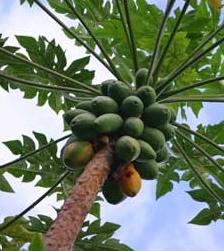
If you are considering, Papain Production, then you must have a Papaya plantation. Papaya is a luscious fruit that has been taken for granted. The total crop area in the Philippines planted to papaya amounts to only 8,720 hectares or 0.1 percent of our agricultural land. Yet no one can deny its tastiness as a dessert or as an indispensable vegetables dish of various recipes. Papaya fruits are good sources of Vitamin A, B and C. It is a familiar meat tenderizer because for clearing fruit juices, on fermenting liquors, pre-shrinking the quality of wool and as soap for washing clothes. Papaya possesses medicinal values.
Papaya can be easily grown in home yard gardens. It can also be a profitable enterprise. Under ordinary farm condition, production cost amounts to only P2,700 per hectare on the first year and P1,500 per hectare on the second year. The net profit on the first year may be less than P400 per hectare; but in the second year the returns can reach as high as P4,000 per hectare. The productive life of a papaya plant is about 3-1/2 years. This means that after establishing the plantation, income will flow with little effort provided you have a ready market.
VARIETIES
There are several cultivars you can choose from whether for backyard or commercial planting:
"Cavite Special " is a popular semi-dwarf type that blooms 6 to 8 months after planting. The fruit weighs from 3 to 5 kilos each and mainly eaten fresh.
"Sunrise Solo" is a new improved high quality selection with reddish orange flesh, each fruit weighing half a kilo.
"Waimanalo" is high quality variety with orange yellow flesh, each fruit weighing from one-half to one kilo.
"Sinta" is the first Philippine-bred hybrid papaya, semi-dwarf, profile, sweet and flesh and weighs 1.2-2.0 kg./fruit.
LAND PREPARATION AND PLANTING
Land preparation for papaya orchard is similar to other upland crops. First clear the fields; then plow and harrow alternately about 2 to 3 times to kill weeds and provide good internal drainage. The distance of planting papaya ranges from 2 to 3 meters depending on the variety.
Papaya plants are usually planted by direct seedling in the field. Place 5 or more seeds in each hole; then cover with ¼ inch of soil. When fresh seeds are used, seeds will germinate in 10 to 14 days after planting. Seed germination is better and faster if the gelatinous envelope (sarcotestae) surrounding the seed is removed by means of the fingers. In some cases, seedlings are started in the nursery by sowing seeds in seed plots or individual containers such as in cans or plastic bags. Sow 3 to 4 seeds per container. Use sterilized soil to avoid nematode infestation and damping-off. Seedlings in the nursery should be grown under full sunlight to produce vigorous and hardy seedlings. Care should be taken not to disturb the root system. Constant watering is essential until plants are well-established. Seedlings are transplanted when there are 3 to 4 leaves.
THINNING
Thin papaya seedlings in the field 4 to 6 weeks after emergence. Leave only 3 of the strongest seedlings in each hole. Save plants that are spaced far enough from one another to allow minimum competition for sunlight and nutrients.
The second and final thinning in the field should be done as soon as flowers appear. This is usually 4 to 6 months after seed germination. At this stage, leave one tree seedling per planting hole. In plantation where female trees are grown, some pollinating trees of either male or hermaphrodite forms should be preserved during the thinning process. Allow one male plant to grow for every 15 to 20 female trees for pollination purposes.
CARE OF PAPAYA PLANTATION
Establishment of Windbreaks
Windbreaks are necessary in areas where strong winds prevail. Local materials used as windbreaks are ipil-ipil and madre de cacao. The distance between windbreaks varies with location. Where winds blow horizontally across the plantation, a common rule of thumb is to space windbreaks at a distance of 20-30 times the height of windbreak trees. Where winds come in different directions and angles, it is necessary to have windbreaks half as close.
In general, a good windbreak should be permeable, allowing some air to pass through.
Fertilization
Factors such as soil types, rainfall, locations, cultural practices, and age of plant influence fertilization practices. Start fertilizing when seeds are planted or when seedlings are transplanted in the field. Mix a handful (5-10gms.) of complete fertilizer (14-14-14) with the soil at the bottom of the hole before planting. As papaya seedlings grow larger, more fertilizer is applied.
Guide for papaya fertilization in the Philippines:
1. Apply 60 grams of ammonium sulfate as soon as plants are well-established and show new growth.
2. Apply the same amount at intervals of six weeks until plants are one year old.
3. Thereafter, apply 225 grams of ammonium sulfate per plant every three months.
4. Apply 450 grams superphosphate per plant at the start of rainy season every year.
5. In potassium-deficient soils, complete fertilizer with ratios 2:1:2 or 2:1:3 is recommended.
Weed Control
Weeds can be controlled by mechanical and chemical means. Hand-weed when papaya plants are less than 2- ½ meter high. Always keep one meter area around the trunk free from weeds.
In large commercial papaya plantation, weed control is done by using herbicides. Spray pre-emergence herbicide to hinder weed control for six months without much damage to plants. Spray post-emergence herbicides such as Paraquat of Gramoxone plus a surfactant, at intervals between sprays 5-6 weeks. Since papaya seedlings are very sensitive to chemical sprays, remove weeds close to the seedlings manually.
Intercropping
Papaya can be grown as intercrop with coconuts, coffee, pineapple or assorted vegetables. Intercropping with papaya increases total farm income and reduces weeding expenses. It is important to provide fertilizer requirement of the intercrop.
Harvesting
Harvesting is a simple operation when papaya trees are short and the fruit can be reached by hands. The first harvesting starts on the 7th to 8th month after planting. Pick all fruits showing a tinge of yellow at apical end.
Place harvested fruits in picking bags, galvanized containers or pails. Allow fruits to mature more fully to develop better flavor. However, this shortens shelf life and make them more susceptible to fruit fly infestation.
When papaya trees grow older, harvesting is done with the use of ladder. It is a tedious, time-consuming and costly method of harvesting. Farmers in Cavite use a long pole to strike the apical end of the papaya fruit to detach it from the tree while the fruit is caught by hand.
The papaya plant will keep on fruiting for many years but production declines rapidly as it grows older. Old trees grow slower and produce lesser fruits. The productive life span of papaya plantations end after 3-1/2 years. The yield of well-managed papaya plantation is 35 to 40 tons of fruits per hectare which is roughly 4 times the average yield (national) of 10 tons per hectare per year.
COMMON DISEASE AND PESTS OF PAPAYA AND THEIR CONTROL
Phytophtora blight - caused by Phytophtora palmivora. Common symptoms are found on stems and fruits. Small, water-soaked, discolored spots may occur anywhere on the stem, around the fruit or leaf scars, especially during fruit production. These infected areas enlarge and often completely encircle stems of young trees. Green fruits are resistant to infection but can be invaded through the wound or through the peduncle from the stem cankers. Infected mature fruits that hand on the tree shrivel as disease progresses, turn dark brown, become mummified and fall to the ground. Mummified fruits become reservoir for fungus and source of infection.
Control - remove rotting fruits from the tree as these serve as reservoir of spores from fungal mass which is carried by rain or wind to healthy parts of plants. These spores may infect non-injured leaf tissue, stems or fruit. Good drainage conditions reduce infection and use of protectant spray such as copper sulfate or DithaneM-45 fungicides limit extent of injury.
Anthracnose - Affects both plants in the field and the fruits at harvested. First symptom is usually a small, round, water-soaked area on ripening portion of the fruit. As fruit ripens, these spots enlarge rapidly, forming circular, slightly sunken lesions; these enlarge up to 2 inches in diameter as fruit matures. Fungus frequently produces large, light orange or pink masses of spores in the center of the lesions. Sometimes spores are produced in concentric rings similar to a bull's eye. In addition to producing this surface damage, the fungus also advances into the fruit.
Occasionally, green portions of the papaya become affected with anthracnose. Disease first appears as a small, water-soaked lesion. Soon after fungus penetrates the fruit, latex comes out in sticky mound of horns. These lesions enlarge to ½ inch in diameter as fruit remains green and eventually plant dies. Infected petioles may act as source of inoculum for infection of fruit.
Control - Control of this disease can be achieved only by means of a thorough spray program. In rainy areas with high temperatures, spray Dithane M-45 at 7 to 10 days intervals. Copper-based fungicides also provide good control.
Papaya mosaic - Initially, leaves develop rugged appearance. Undersides of leaves show thin, irregular, dark-green lines etching the borders of cleared area along veins. Younger leaves of crown are generally stunted and severely chlorotic with veins banding; transparent oily areas are scattered over leaf or along leaf veins. In mature leaves, chlorotic patters is light color between veins accompanied by numerous small rinds ranging from transparent yellow to tan yellow. In several affected areas, defoliation progresses upward until only a small tuft of leaves remains at the crown. Stems of infected plants show pinpoint-sized, water-soaked spots may develop into linear or concentric ring patterns, w/c become larger and more intense in color. This is generally transmitted by green peach aphid, Myzuz persicae.
Control - The only satisfactory way of controlling mosaic is by destroying source of the virus. A strick roguing program should also be followed:
- Spray all infected trees with insecticide to kill aphid carriers.
- Cut all infected trees and remove them from growing trees and other cucurbit plants.
- Avoid nearby cultivars of cucurbit plants.
- Control aphids with pesticides since they are disease-carriers.
Insect Pests:
Mites - They colonized on different parts of plants and feed on plant, causing premature leaf drop, reduce tree vigor and produce external blemishes on fruit. They puncture plant tissues with their needle-like mouthparts and feed on tissue juices. Some mutiply rapidly throughout the year and cause widespread damage in a very short time.
Control - Control mites by sulfur dustings. Spray Malathion at rates recommended by manufacturers.
Fruit fly - These infest papaya when fruits are allowed to ripen on the tree beyond recommended picking stage. Fruits harvested in the mature green stage are not infested due to the milky substance they exude when fruit is punctured.
Control - Sanitation is important. Destroy all dropped and pre-mature ripe fruits and suspected of being infested to prevent larvae from developing into adults flies.
MEDICINAL VALUES OF PAPAYA
Bruised papaya leaves are used as poultice in treating rheumatism. In nervous pains, leaves can be dipped in hot water or warmed over a fire and applied. As purgative, one tablespoon of the fresh fruit juice mixed with honey and 3 to 4 tbsp. of boiling water is taken one draught by an adult; two hours later, it is followed by a dose of castor oil. This treatment is repeated for 2 days, if necessary, for children aged 7 to 10 years old. The children under 3 years, half the dose is given.


 Tapping & harvesting of toddy
Tapping is done twice a day. Harvesting of toddy can be done in morning ( taken before 8 am ) for the production of ‘tuba’ or vinegar while for the production of fresh sap drink, nectar and sugar, it is best to used the afternoon harvest ( taken not later than 3 pm ) which is sweeter than the morning harvest. To produce sweet toddy, it is necessary that all tools and containers to be used should be clean at all times. Adding of lime to the receptacle prevents the sap from fermentation.
Tapping & harvesting of toddy
Tapping is done twice a day. Harvesting of toddy can be done in morning ( taken before 8 am ) for the production of ‘tuba’ or vinegar while for the production of fresh sap drink, nectar and sugar, it is best to used the afternoon harvest ( taken not later than 3 pm ) which is sweeter than the morning harvest. To produce sweet toddy, it is necessary that all tools and containers to be used should be clean at all times. Adding of lime to the receptacle prevents the sap from fermentation.